
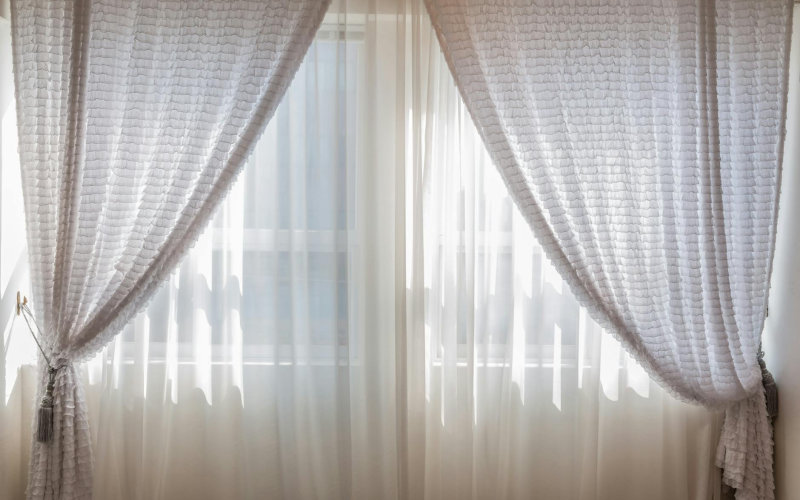

My east-facing bedroom used to be a crime scene every summer morning. Six-fifteen AM, full sun, straight into my eyeballs. I tried cheap roller blinds—those flimsy white ones from the big-box store—and they did basically nothing. Washed out, glowing around the edges, completely useless against real direct sunlight.
After twelve years writing about home interiors and testing products in my own house and clients’ homes, I’ve learned that most people pick window treatments based on how they look in the store. That’s exactly backwards. The right question isn’t “does this look nice?” It’s “what is this window actually doing to my room in January versus July, at 7 AM versus 4 PM?”
Season changes everything. A sheer linen curtain that feels perfect and breezy in October becomes a glowing heat trap by August. A blackout shade that saves you in summer leaves your living room feeling like a cave all January. So here’s how to think through this properly.
Understand Light Openness Ratings First
This is the thing most people have never heard of, and it genuinely changes how you shop.
Fabric blinds and shades get rated by “openness factor”—a percentage telling you how much light passes through the weave. A 1% openness fabric blocks roughly 99% of light. A 10% fabric lets considerably more through. Manufacturers like Hunter Douglas and Lutron list these specs openly on their product pages.
For rooms where you want daytime privacy without total darkness, a 3–5% openness solar shade hits the sweet spot for most people. Go below 1% and things start feeling oppressive during daylight hours unless your overhead lighting is exceptional. This is specific, measurable information. Use it.
Think in Layers, Not Single Solutions
Single-layer treatments almost always fail somebody. Too much or not enough, depending on the time of year.
The layered approach means combining a functional interior layer with a softer decorative one. In practice, that’s a cellular shade or solar roller paired with side-panel curtains. The shade handles actual light control. The curtains handle ambiance, insulation, and the “room looks finished” problem.
I installed this exact combination in my home office in 2021—a 3% openness solar shade from Budget Blinds paired with linen-blend drape panels—and it handles every season without much fiddling. Summer afternoon sun? Drop the shade. Gray November morning when I want every scrap of available light? Raise it fully, curtains open. Done.
Match the Treatment to the Window’s Orientation
North, south, east, west. It matters more than your décor preferences.
North-facing windows get indirect, diffused light all year. In the UK or northern US states, they can feel perpetually dim come December. Heavy blackout treatments on a north window are almost always overkill—you’re smothering the one soft light source the room actually has. Sheers or sheer-lined curtains work better here.
South-facing windows are the drama queens. Intense sun for long stretches in summer, low raking sun in winter. This is where layered treatments genuinely earn their keep. East and west windows are about timing—east hits you hard in the morning, west turns brutal in late afternoon. Adjustable solutions (specifically Venetian blinds or woven wood shades with adjustable slats) give you directional control that no fixed fabric treatment can match.
Don’t Ignore Seasonal Heat Gain and Loss
Light control and temperature control are the same conversation. People forget this constantly.
A 2019 Department of Energy study found that roughly 30% of a home’s heating energy escapes through windows in winter, and in summer, solar heat gain through glass can account for 76% of the heat entering a room. That’s enormous. Cellular (honeycomb) shades were specifically engineered around this problem—their air pockets create insulation that standard roller shades simply don’t provide.
So in winter, your window treatment’s job is partly to admit solar heat during the day and block cold drafts at night. In summer, the job flips: cut heat gain during peak sun hours, open everything up once it cools down. Treatments that let you do both—cordless cellular shades with top-down/bottom-up functionality—are worth every extra dollar. You get natural light pouring in from the top half while blocking direct sun coming in low at the bottom. Clever engineering, genuinely useful.
Blackout Isn’t Always the Answer
People reach for blackout immediately and then regret it.
Full blackout lining is genuinely necessary in bedrooms, home theaters, and nurseries. But in living rooms and kitchens, total blackout creates a weird flat darkness that makes electric lighting feel harsh and artificial at noon. It’s disorienting in a way that’s hard to pinpoint until you’re living with it.
Room-darkening fabric—which blocks 95–99% of light but not the full hundred—is often the smarter call for common areas. Brands like Smith & Noble and Pottery Barn offer this as a lining upgrade on their fabric shades and curtains, typically adding $30–$60 per panel. Worth every cent in the right application.
Consider How Each Season Changes Your Priorities
Do a quick seasonal audit. Literally go room by room and ask what’s actually bothering you in each season.
Summer problems are usually glare, heat, and privacy (windows open, neighbors closer to the action). Winter problems are darkness, cold drafts, and that dingy grey feeling by 3 PM. Spring and fall are generally the most forgiving—though low morning sun angles in spring can be surprisingly sharp and annoying.
Once you’ve done this audit, you’ll often find that different rooms need different solutions. Your south-facing kitchen window probably needs a proper solar shade far more urgently than your north dining room, which might just need softer sheer panels swapped out seasonally.
The Hardware Matters More Than Anyone Admits
Cheap tracks and brackets ruin expensive treatments. Full stop.
If your curtain rod flexes under heavy lined panels, you’ll get gaps at the center where light pours straight through—defeating the entire purpose. Invest in a rod rated for the weight you’re hanging. For curtains spanning more than 8 feet, a center support bracket isn’t optional. And measure your window accurately before buying anything. The classic mistake is measuring the glass only.
For full light block, your treatment needs to extend at least 2–4 inches beyond the window frame on each side and sit close to the ceiling, not hung awkwardly halfway down the wall.
Bottom Line
Here’s a reframe I’ve never seen written anywhere else, and I think it’s the most useful thing in this entire piece: stop thinking about window treatments as a “set it and forget it” purchase, and start treating them the way you treat your wardrobe. You wouldn’t wear a wool overcoat in July. Your windows need seasonal adjustments too—sometimes just in how you operate what’s already there. The people who get this right aren’t necessarily spending more money. They’re just using what they have intentionally. A $200 cellular shade operated thoughtfully beats a $600 motorized system stuck on one setting all year.
Frequently Asked Questions
What are the best window treatments for light control in a bedroom?
Cellular blackout shades with room-darkening lining are your best bet, especially combined with curtain panels for draft control. Top-down/bottom-up functionality gives you real flexibility—you can let in morning light without sacrificing privacy.
Do solar shades work in winter too?
Yes, and better than most people expect. Solar shades block glare and UV year-round without cutting your view. In winter, they reduce heat loss at night while still letting solar heat in during daylight hours, which is genuinely useful.
How far outside the window frame should treatments extend?
At minimum 2 inches on each side, but 4 inches is better for real light block. For curtains, extending to the ceiling line rather than just above the frame makes rooms feel taller and cuts light bleed from the top.
Are motorized shades worth it for light control?
For large windows, south-facing rooms, or anyone with mobility issues, yes. But the light control benefit comes from the shade itself—not the motor. Don’t pay for motorization hoping it solves a treatment problem. Pick the right fabric first, then decide if automation actually fits your lifestyle.
Photo by Pixabay on Pexels

