
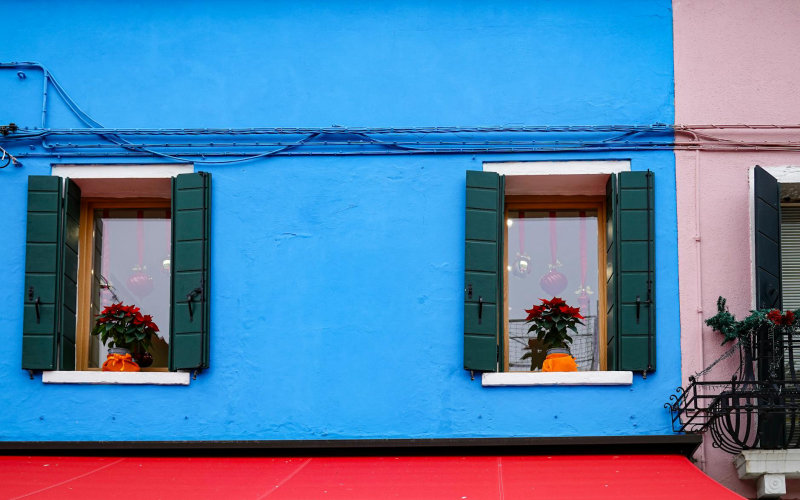

I’ve watched neighbors repaint their houses three times in four years trying to get it right. Three times. And every single time, the color looked incredible on a tiny chip at the hardware store and somehow completely wrong stretched across 2,000 square feet of siding. The problem wasn’t the color itself — it was that nobody told them the color had to answer to the architecture first.
Your house’s style is basically a set of rules you didn’t write. Ignore them and the paint fights back. Work with them and even a modest ranch can stop traffic.
So here’s what I’ve picked up after helping friends, doing my own exterior overhaul in 2021, and obsessively reading every color guide I could get my hands on: matching paint to architectural style isn’t about personal taste first. It’s about structure first, personality second.
Why Architecture Has to Come Before the Color Fan Deck
Most people flip this completely backward. They fall for a color they love — a dusty sage, a moody navy — then can’t figure out why it looks off on their specific house. Here’s the thing: different architectural styles were literally built during different eras with specific color conventions baked right in. Victorian homes from the 1880s and 1890s were designed to show off ornate trim through contrast. Mid-century modern houses from the 1950s were built around restraint and a real connection to natural materials.
Paint against those conventions and something feels “off” even to people who can’t articulate why. Your neighbors sense it. Buyers sense it. You’ll sense it every morning backing out of the driveway.
Start by pinning down your style. Not sure what you’ve got? A quick search of your home’s build year, combined with a look at the roofline, window shapes, and porch structure, will usually tell you everything you need.
Craftsman and Bungalow Homes: Earthy and Grounded
Craftsman homes — most built somewhere between 1905 and 1930 — were a deliberate pushback against fussy Victorian excess. The whole philosophy centered on honest materials, handcraft, and a genuine tie to the natural world. So earth tones aren’t just trendy on these houses. They’re historically correct.
Think warm browns, olive greens, deep ochres, muted terracottas. Benjamin Moore’s “Russett” or Sherwin-Williams’ “Sage” both work brilliantly on Craftsman siding. The trim (and there’s plenty of it on a good bungalow) should run slightly lighter or darker than the body, not dramatically different.
One thing that kills a Craftsman exterior fast? Bright white trim. It reads too formal, too Colonial. Reach for a creamy or warm off-white — something like “Antique White” — instead. The whole palette should feel like it grew out of the earth rather than being imposed on it.
Victorian Homes: This Is Where Bold Actually Lives
If you own a Queen Anne or Painted Lady Victorian and you painted it beige, I’m genuinely sorry. These houses were purpose-built to celebrate color. The original paint manufacturers of the late 1800s — companies like Sherwin-Williams, founded in 1866 — actively marketed multi-color schemes specifically for Victorian architecture.
Three, four, even five colors on a single Victorian exterior isn’t excessive. It’s correct. You want a body color, a trim color, accent colors on the gingerbread woodwork, and often a completely separate color for the window sashes. Deep burgundy body with forest green trim and gold accent details? Perfect. Slate blue with ivory trim and a terracotta door? Absolutely.
The only real mistake is going monochromatic. A flat, uniform coat wipes out everything those intricate carved details were meant to show off.
Colonial and Cape Cod: Symmetry Demands Restraint
Colonial homes are about order. Symmetry. Clean lines. They trace back to American architectural roots in the 1600s and 1700s, and the color palette should carry that same restraint.
Classic white with black or dark green shutters is practically a standing rule. But you’ve got more room than you might think. Deep reds, slate grays, colonial blues, even a warm charcoal — all of these can work beautifully. What you’re after is a palette that feels dignified: two or three colors maximum, with nothing competing for attention.
On a Cape Cod specifically? Natural cedar shingles aging to silver-gray are basically the gold standard. If you’re painting over shingles, choose something that echoes that weathered quality. Soft grays and pale blues do this particularly well.
Ranch Homes: Low and Wide Needs Horizontal Contrast
Ranch houses have a built-in visual problem. They’re horizontal. Very horizontal. The wrong color choice makes them look like they’re actively trying to sink into the ground.
Here’s the fix: use contrast to create the illusion of height. A lighter body color with a darker trim along both the roofline and the foundation pulls the eye up and down rather than just sideways. Medium-value neutrals — warm greiges, soft tans, dusty blues — tend to perform well as body colors on ranches.
And avoid very dark colors on those wide horizontal surfaces. A dark charcoal might look stunning on a two-story Craftsman but will make a ranch look like a concrete bunker. I watched my friend in Sacramento try exactly that on her 1962 ranch before she repainted in 2022. Looked terrible.
Mid-Century Modern: Respect the Lines
MCM homes are defined by clean geometry, flat or low-pitched roofs, and generous windows. The color palette should honor all of that. Earthy and bold simultaneously — which sounds contradictory until you see burnt orange, avocado green, or deep teal set against exposed wood and concrete. Then it makes complete sense.
White works fine on MCM. But the genuinely interesting choices come from the warm, saturated earth tones native to the 1950s and ’60s themselves. Think the original Eichler homes in California — many used terracotta, warm gray, and redwood stain combinations that felt rooted rather than applied.
Stay away from layered, fussy palettes here. One strong color. Clean trim. Done.
Don’t Forget the Fixed Elements You Can’t Change
Here’s something most color guides skip entirely: you’re not choosing paint in a vacuum. Your roof is already a color. Your brick or stone accents are a color. Your driveway is a color. All of those are fixed quantities, and your paint has to hold a conversation with all of them at once.
Pull actual material samples and hold them against your color chips in natural daylight — not inside under fluorescent store lighting, which will lie to you every single time. The roof undertone is the big one. A warm brown roof paired with cool gray siding looks like an accident. Match undertones first, then sort out shade.
And actually test your finalists on the wall. Paint two-foot square patches and live with them for 48 hours, at different times of day. Light changes everything.
Bottom Line
Here’s my honest take after years of watching people agonize over this: the biggest mistake isn’t picking the wrong color. It’s picking a color that fights the architecture’s emotional register. Every style carries a mood — Victorian is theatrical, Craftsman is grounded, Colonial is composed. When your color contradicts that mood, visitors feel vaguely unsettled without knowing exactly why. So before you fall for a color, ask what mood your house is actually trying to express. Then find a color that agrees with that mood and happens to also be beautiful. That order matters more than any specific shade.
Frequently Asked Questions
How many colors should I use on a home exterior?
Most homes look best with three: body, trim, and accent (usually the door). Victorian homes are the exception — they can carry four or five colors because the architecture was specifically designed around that layering. For everything else, restraint almost always wins.
Does my roof color really affect which paint I should choose?
Completely. Your roof is one of the largest visible surfaces on the whole house. If your shingles run warm (brown, tan, red), your siding needs warm undertones too — otherwise the whole thing reads as a mistake. Bring a shingle sample to the paint store.
Can I paint a brick home?
You can, but it’s a long-term commitment. Once you paint brick, removing it becomes a serious and expensive undertaking. If you’re going to do it, use a masonry-specific paint and choose a color that plays well with the original mortar, since you typically can’t paint that part.
What’s the best way to test exterior paint colors before committing?
Buy sample quarts — most major brands sell them for around $5 to $8 — and paint large 2×2 foot patches directly on your exterior wall. Check them at 8am, noon, and 4pm over two days. Colors shift dramatically depending on light direction and intensity, and a chip at the store tells you almost nothing about how it’ll actually read at full scale.
Photo by Magda Ehlers on Pexels

