

I’ve spent most of my adult life in rental apartments and beat-up fixer-uppers. And the one thing that turns a room into a cardboard box — no matter how gorgeous your furniture is — is flat, featureless walls running floor to ceiling with absolutely nothing to interrupt them.
No character. No depth. Just… wall.
The good news? You don’t need a contractor or a $15,000 remodel to fix it. These seven approaches run the gamut from genuinely dirt-cheap DIY to slightly bigger investments that still land well under $500. I’ve tried most of them myself. The ones I haven’t, I’ve watched close friends pull off beautifully in their own spaces.
1. Picture Rail Molding (The Underrated Classic)
Most people skip this one. They assume it’s complicated. It isn’t.
Picture rail molding runs near the ceiling — originally designed to hang art without gouging plaster — but today it functions as a quiet architectural line that tricks your eye into reading the ceiling as taller. Primed MDF picture rail at Home Depot runs roughly $1.50 to $2.50 per linear foot. A 12×12 room? Maybe $80 in materials.
Nail it up, caulk the seams, paint it to match your wall or nudge it slightly brighter for contrast. That single horizontal line does something remarkable to how the whole room reads. And you can still hang things from it using those little brass hooks, which is honestly just a bonus at this point.
2. Board and Batten Below the Chair Rail
This is probably the most popular DIY wall treatment on every home improvement forum right now. And it deserves the hype.
Board and batten lays a grid-like pattern of thin wood strips (the “battens”) over a solid painted surface. The visual weight it dumps into the lower half of your wall is genuinely surprising — it photographs beautifully and makes even a builder-grade hallway look like someone made real decisions in there.
So here’s what it costs: 1×3 pine boards run about $0.75 to $1.25 per linear foot. A typical dining room lands somewhere between $150 and $250 total in lumber and paint, plus a weekend. YouTube channel “Ugly Duckling House” has one of the clearest tutorials I’ve come across — Sarah’s version in her Atlanta craftsman home looks nearly identical to what a custom millwork company would charge $3,000+ to install.
Paint everything the same color. Wall, battens, all of it. That monochromatic finish is the whole trick. It’s what separates “looks expensive” from “looks slapped together.”
3. Peel-and-Stick Wall Panels (Modern Foam Alternatives)
Foam wall panels have come a long way. Five years ago they looked cheap because they were cheap. Today? Some of them are genuinely hard to distinguish from real plaster or wood at normal viewing distance.
Brands like Dundee Deco and Ekena Millwork make textured panels that peel and stick directly onto drywall — no adhesive, no nails, zero damage. A 12-pack covering roughly 28 square feet runs $35 to $60. For a single accent wall you’re probably spending $80 to $120 total.
They’re not permanent solutions, I’ll be clear about that. But they’re perfect for renters, and even for homeowners who want to audition a look before committing to something messier. Your walls are your most visible canvas — experimenting isn’t frivolous, it’s smart.
4. Wainscoting Panels (The Real Thing, Done Cheap)
Traditional wainscoting uses raised wood panels on the lower third of your wall. It looks incredibly expensive. It doesn’t have to be.
The shortcut is beadboard plywood instead of individual tongue-and-groove boards. A 4×8 sheet of 1/4-inch beadboard plywood at Lowe’s runs $28 to $35 and covers a serious stretch of wall. Throw a simple chair rail molding across the top, paint everything the same crisp white (Benjamin Moore “White Dove” is the one I keep circling back to), and suddenly you’ve got something that looks like it belongs in a $900,000 colonial.
Full dining room budget if you’re doing it yourself? Probably $200 to $350. That’s not nothing. But it’s nowhere near renovation money.
5. Floating Shelving With Deliberate Symmetry
Here’s something designers understand that most people don’t: symmetry reads as architecture.
Two matching floating shelves at identical heights — flanking a window, sitting above a sofa — create a built-in feeling that your brain automatically interprets as intentional structure. They don’t need to be expensive. IKEA’s LACK shelves have been a staple since the early 2000s for a reason. They’re dead simple and cost $20 each.
But — and this part really matters — what you put on them determines whether this looks architectural or just cluttered. Limit yourself ruthlessly. Three objects per shelf, maximum. A plant, a book stack, one decorative thing. That’s the whole formula.
6. Wallpaper on a Single Panel or Recessed Area
Full-room wallpaper is a commitment. One wall is a much easier relationship.
And if your room has any kind of recessed section — a window bump-out, an alcove, a gap between two doorframes — that’s your opportunity sitting right there. Papering just that inset costs dramatically less than papering a full room and creates the kind of defined “moment” that makes a space feel designed rather than decorated.
Removable peel-and-stick wallpaper from Tempaper or Chasing Paper has gotten shockingly good over the last three years. Rolls start around $40 to $60, and a small alcove might take two rolls tops. It also peels clean — I tested this myself in a 1970s apartment with original plaster, and there was zero damage.
7. DIY Plaster or Venetian Plaster Finish
Okay. This one takes practice. I’m not going to pretend otherwise.
But if you’re willing to spend a Saturday learning technique on a closet wall first, hand-applied plaster or limewash adds more raw textural depth than almost anything else on this list. Portola Paints’ Roman Clay (around $98 per gallon, covering roughly 250 square feet at one coat) gives you that organic, Old World surface that dominated every design account from 2022 through 2023 — because it genuinely looks extraordinary.
You apply it with a stainless steel trowel, build thin layers, burnish the surface as it sets. The imperfections aren’t mistakes. They’re the whole point. That’s exactly what makes it feel architectural rather than just painted.
Bottom Line
Here’s my honest read after years of doing this in tight-budget spaces: the biggest mistake people make isn’t picking the wrong treatment. It’s thinking about each wall separately instead of the room as a system of visual weight. One stunning board-and-batten wall surrounded by three completely bare ones actually looks worse than doing nothing at all. You want interest distributed around the room so your eye keeps moving rather than smashing into one focal point and stopping cold. Start with whatever wall faces the door — that’s your priority wall. Build outward from there.
Frequently Asked Questions
How much does it typically cost to add architectural detail to plain walls on a budget?
Most of these approaches fall between $50 and $350 depending on room size and materials. Board and batten and wainscoting tend to be the priciest DIY options; peel-and-stick panels and picture rail molding are the cheapest entry points.
Can renters add architectural interest to walls without losing their deposit?
Yes — peel-and-stick panels, removable wallpaper, and floating shelves with proper anchoring are all renter-friendly. Avoid adhesives that bond permanently to drywall and always patch nail holes before leaving.
What’s the easiest architectural wall treatment for a complete beginner?
Floating shelves with deliberate symmetry. Minimal tools, low cost, completely reversible, and the visual payoff is immediate.
Does paint color affect how well these architectural treatments show up?
Dramatically. High-contrast paint — like painting battens white against a deep navy wall — makes the three-dimensional texture pop. Monochromatic same-color approaches look elegant but subtler. Neither is wrong; it depends on how loud you want the effect to be.
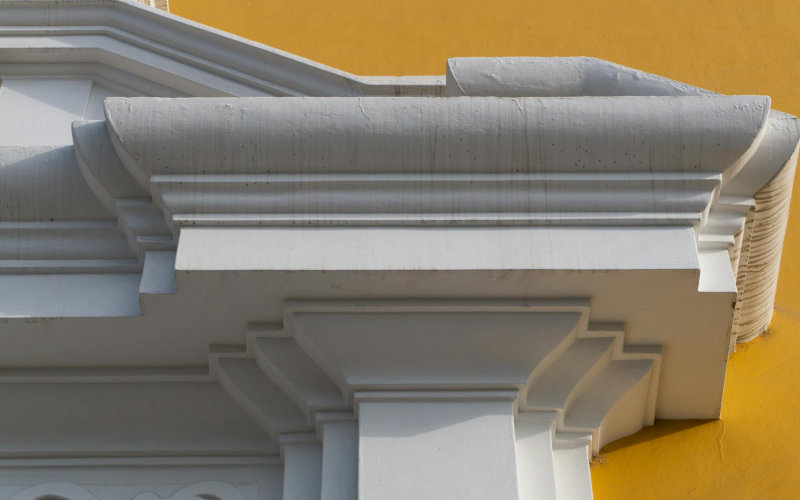
Photo by Humberto Quispe on Pexels

