
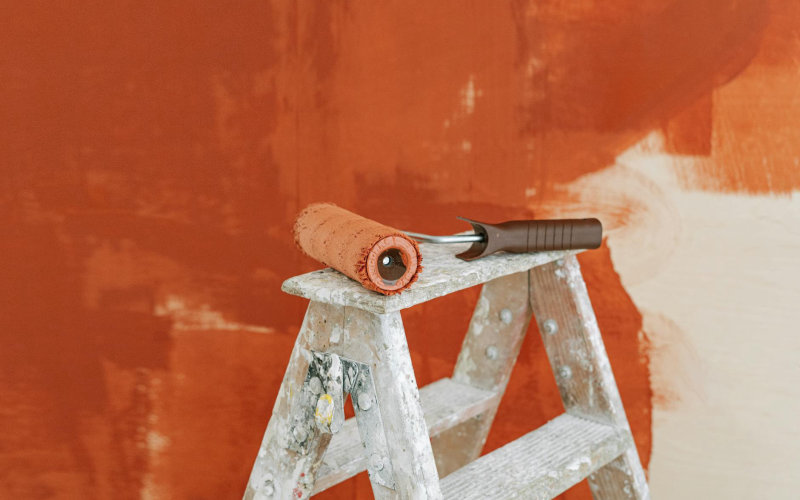

My first “grown-up” paint job was my living room in 2014. I bought the paint, grabbed some brushes, skipped the primer because the guy at Home Depot seemed busy, and dove right in. Four hours later I had streaky, patchy walls that looked like a nervous kid had done it on a dare. I repainted the whole room the following weekend, which cost me an extra $60 in paint and a Sunday I’ll never get back.
Here’s the thing: most interior wall painting mistakes to avoid aren’t mysterious or complicated. They’re just the stuff nobody tells you before you crack open that first can. So let me save you the Sunday.
Skipping the Prep Work (Yes, All of It)
Painting over dirty, greasy, or cracked walls is the single fastest way to guarantee a result you’ll hate. The paint doesn’t stick properly to grime, so it peels. It doesn’t hide cracks, so they telegraph right through the topcoat. You end up with a wall that looks freshly painted for about two weeks before it starts confessing its sins.
Before you even think about color, wipe the walls down with a TSP substitute or sugar soap solution. Fill holes and hairline cracks with spackle — let it dry fully, sand it smooth, done. If you’ve got glossy surfaces, a light scuff with 120-grit sandpaper helps the new paint grip. Boring? Yes. Worth it? Every single time.
Not Using Primer When You Actually Need It
Here’s where I have a mildly contrarian take: you don’t always need primer. Modern paint-and-primer combos do a genuinely decent job on already-painted walls in similar colors. But there are situations where skipping primer is a real mistake: going from dark to light, painting over new drywall, covering stains or water marks, or working with a porous surface.
New drywall is the big one most guides gloss over. Unprimed drywall absorbs paint unevenly — some sections soak it up fast, others don’t, and you end up with a flat effect that looks matte in patches. A single coat of PVA primer (around $18 at Lowe’s) fixes this completely. One coat. That’s it.
Buying Too Little Paint and Then Running Out Mid-Wall
I’ve watched friends do this at least a dozen times. They calculate square footage, round down optimistically, and then hit a dry spell three-quarters of the way up an accent wall. Running out mid-coat is a genuine problem because touching up with a freshly opened can — even the same color. can produce visible lap lines where the wet edge dried before you could blend it.
The real math: one gallon covers roughly 350-400 square feet with one coat. For two coats on a standard 12×14 bedroom, you’re looking at at least two gallons, sometimes creeping toward three if the walls are textured or if you’re going dramatically darker. Buy one more than you think you need. Leftover paint stores well for touch-ups.
Using the Wrong Tools for the Job
A cheap $2 brush drags and leaves bristle marks. A too-thick roller nap on smooth drywall creates a bumpy texture called “orange peel” that looks odd in bright light. These aren’t small things.
For smooth to semi-smooth walls, a 3/8-inch nap roller is your friend. For textured surfaces, step up to 1/2-inch. And please, use a quality angled brush, something like a Purdy Clearcut or Wooster Shortcut, for cutting in around trim and corners. They run about $12-16 each and last years if you clean them properly. The difference in finish quality between a budget brush and a decent one is genuinely surprising; you’ll see it immediately.
Not Maintaining a Wet Edge While Rolling
This one trips up a lot of careful, methodical DIYers who think slow and steady wins. Here’s the problem: if you roll one section and let it start drying before you roll the adjacent section, you get lap marks. Those are the slightly darker stripes you sometimes notice on walls in certain lighting. They’re maddening because they don’t show up until the paint is fully dry and you can’t do anything about them easily.
The fix is simple but requires a rhythm. Work in vertical sections about 3-4 feet wide. Roll the next section while the edge of the previous one is still wet, overlapping by a couple of inches. Keep moving; don’t stop for long phone calls. And always finish with light, full-length strokes from top to bottom to smooth everything out. A little urgency helps here. treat it like cooking something that burns if you walk away.
Painting in the Wrong Conditions
Temperature and humidity matter way more than the can tells you. Most interior latex paints want somewhere between 50°F and 85°F with reasonable humidity. Paint in a room that’s too cold (say, an unheated basement in February) and it won’t cure properly; it stays tacky and picks up lint and fingerprints for days. Too hot, and it dries too fast before you can blend lap edges.
But the sneakier one is humidity. I painted my bathroom in July 2022 without running the exhaust fan for the first two days of curing. The paint stayed soft and slightly tacky for almost a week because of trapped moisture. Now I crack a window and run a small box fan. Takes longer to dry but cures solid.
The Honest Truth
Honestly? Most of these mistakes share one root cause: rushing. Painting a room well takes two days minimum, one for prep and prime, one for two coats with proper dry time in between. The shortcuts feel worth it until you’re looking at patchy, peeling, streaky walls under a lamp in December.
If I had to pick one thing to focus on, it’d be prep. Clean walls, filled holes, proper surface. Everything else can be improved with technique, but no technique fixes a bad surface. Slow down before you open the first can, and the actual painting part gets genuinely satisfying.
FAQ
How long should I wait between coats of interior paint?
Most latex paints need at least 2 hours between coats, but 4 hours is safer, especially in humid conditions. Check the can. oil-based paints need much longer, sometimes 24 hours.
Do I need to use painter’s tape every time?
Not necessarily. If you’ve built up a steady hand for cutting in, tape isn’t always required on trim. But for beginners or for crisp lines on two-tone walls, 3M ScotchBlue tape is genuinely worth the 20 extra minutes.
What’s the best way to fix lap marks after the paint has dried?
Let the wall dry completely, sand the affected area lightly with 220-grit paper, then recoat using a fresh roller and maintaining a proper wet edge this time. It usually clears up with one careful pass.
Photo by Ivan S on Pexels

