

Here’s something I’ve noticed: most deck maintenance advice online assumes you have three free weekends, a pressure washer rental, and a contractor on speed dial. You don’t. Or at least, I never do. What I’ve got is a Saturday morning with decent energy and a Sunday afternoon before I lose motivation entirely.
So last May, before the heat really hit, I spent one focused weekend working through every task my deck actually needed — no overthinking, no skipped steps. The whole thing took maybe nine hours spread across two days. The deck looked genuinely great all summer. This list is what I did, roughly in the order that makes sense.
1. Walk Every Board and Actually Look
Start here. Not with cleaning, not with staining. Walk the whole deck slowly — barefoot if you can stand it — and press down on each board with your foot. You’re listening for soft spots and feeling for flex that shouldn’t be there.
Soft wood means rot. And rot doesn’t stop. I found a 16-inch section near my steps back in 2023 that had gone completely spongy; if I’d caught it a season earlier I’d have replaced two boards instead of five. Run a screwdriver tip firmly across any boards that look gray or discolored. If it sinks in more than a quarter inch, that board needs replacing before you do anything else.
2. Tighten or Replace Every Fastener You Can Find
Loose screws and popped nails are the sneaky part of your summer deck maintenance checklist DIY routine that most guides just skip over. Spend 20 minutes with a drill and a box of 3-inch deck screws (I like GRK #10s for hardwood decks). Drive a new screw an inch away from any nail that’s started to lift.
And check your ledger board connection. that’s where your deck attaches to the house. If any of those bolts have worked loose, that’s a structural issue, not a cosmetic one. Two or three of them being slightly loose is completely normal after a winter; snug them back up with a socket wrench.
3. Clean the Deck Surface Properly (Without Wrecking It)
Pressure washing feels satisfying, but here’s the honest truth: most people set the pressure too high. Anything above 1,200 PSI on standard wood decking will fuzz up the grain and actually accelerate weathering. I learned this the hard way on a cedar deck I basically destroyed in 2021.
Use a deck cleaner, Defy Wood Cleaner or similar. mixed according to the label, applied with a stiff brush or low-pressure sprayer, then rinsed off. For composite decking like Trex or TimberTech, a regular garden hose and a mild dish soap solution is honestly all you need. Rinse the gaps between boards too; that’s where mold and mildew like to build.
4. Inspect Your Railings Like Your Life Depends on It
Because someone’s might. Grab each railing post at the base and give it a real shake. No wobbling allowed. If a post moves even slightly, you’ve got either a loose base plate or a rotted post bottom.
Balusters, the vertical pieces between posts. should have less than 4 inches of space between them (building code, and also just common sense if you have kids or a dog who thinks gaps are invitations). While you’re at it, check any metal hardware at the post bases for rust. A little surface rust gets a wire brush and a coat of Rust-Oleum; deep pitting means the bracket should be swapped out.
5. Check the Space Under the Deck
You probably never look under there. I definitely avoided it for two years. But the space beneath your deck is where moisture collects, where wood-boring beetles like to nest, and where old leaves become a genuine fire hazard.
Clear out any debris you can reach. Look at the posts sitting on their concrete footings, there should be a small gap between the post base and the concrete, with a metal standoff bracket keeping direct wood-to-concrete contact from happening. If a post is sitting directly on concrete with no bracket, moisture is wicking up into that post every single rain. That’s a fix worth doing now.
6. Sand and Spot-Treat Before You Stain
Here’s where people lose patience and just slap stain over a surface that isn’t ready. Don’t do that. It’s the number-one mistake I see in DIY deck forums.
Any board that’s rough, splintering, or has peeling old stain needs an 80-grit sand before you apply anything new. You don’t need to sand every board on the whole deck. just the problem areas. For exposed end grain on boards (the cut ends near stairs, say), brush on a dedicated end grain sealer like Armstrong Clark’s. End grain drinks moisture faster than any other surface on your deck; sealing it takes five minutes and adds years.
7. Apply a Fresh Coat of Stain or Sealer
This is the task most people do first, which is exactly backwards. Everything above has to happen first. But now, with a clean, dry, lightly sanded surface. a semi-transparent stain or penetrating oil sealer is going to look genuinely beautiful.
Wait for a stretch of 48 hours with no rain forecast and temperatures between 50°F and 90°F. Apply thin coats; two thin ones beat one thick one every time. I’ve used Armstrong Clark Semi-Transparent on a pine deck and Cabot Australian Timber Oil on an ipe deck, both held up beautifully through a full summer. Let the first coat dry completely (usually 24 hours) before applying the second.
8. Condition Your Outdoor Furniture and Hardware
One task that almost nobody includes on their summer deck maintenance list: your furniture and metal hardware need attention too. Teak, eucalyptus, and acacia furniture should get a coat of teak oil or Danish oil before the peak UV hits. Metal furniture with any rust spots needs a light sand and touch-up spray before the rust spreads.
Check your deck lighting fixtures if you have them. loose wire connections and cracked fixture housings after a winter are common. And if your deck gate latch has been stiff since October, now’s the time; a little 3-IN-ONE oil takes 45 seconds.
Where to Start If You Only Have Half a Day
Do tasks one, two, and six in that order. Finding rot and fixing loose connections first protects your investment in everything else you do afterward. Staining a structurally questionable deck is expensive lipstick.
The other honest thing I’ll say: most guides tell you to do all of this every single year. Realistically, a thorough clean and full re-stain every two to three years, with a quick inspection each spring. is totally reasonable for most decks. But this weekend? Walk every board. Check every railing. It takes 20 minutes and it’s the part that actually matters.
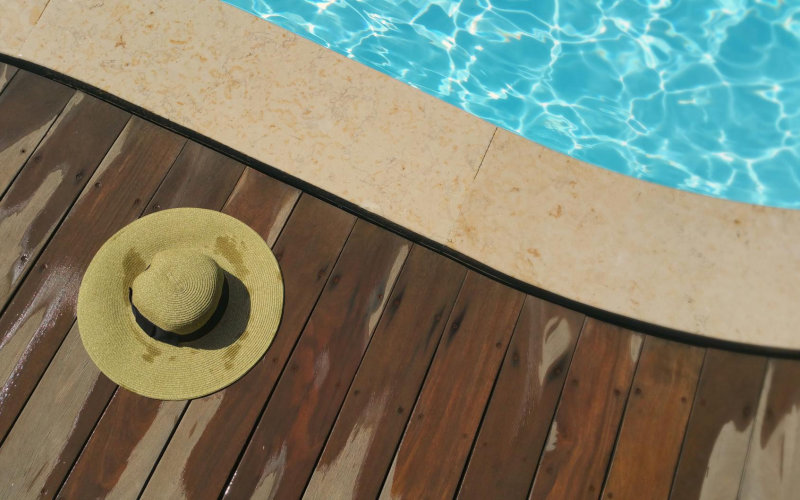
Photo by Pixabay on Pexels

