
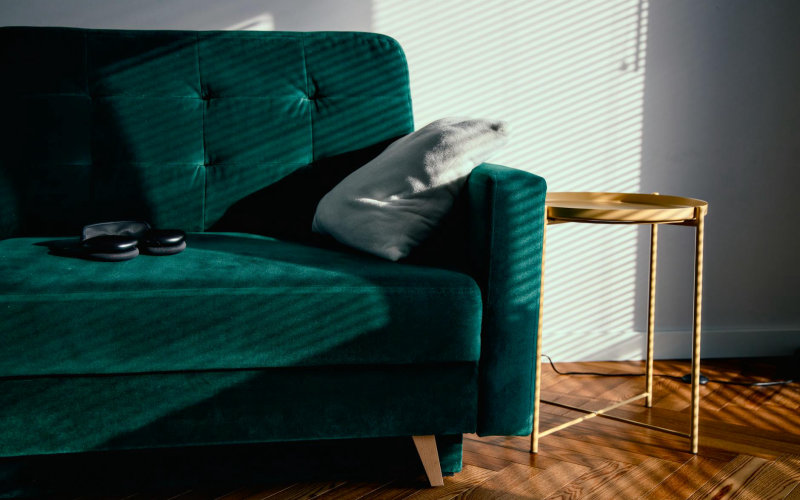

Okay, so here’s a question I get asked ALL THE TIME — “Alex, I’m obsessed with that boucle sofa I saw on Pinterest, but I have two dogs and a toddler. Should I even bother?” And honestly? This is the conversation we NEED to have before you spend $2,000 on a sofa that turns into a disaster zone within six months.
Because here’s the uncomfortable truth most interior design blogs will not say out loud: both bouclé AND velvet are high-maintenance fabrics. Neither one is “easy.” But — and this is a BIG but — one of them is significantly more forgiving in a real, lived-in home. And I’ve had opinions about this ever since I reupholstered my reading chair in ivory bouclé back in 2023 and watched my cat destroy it in approximately three weeks.
So let’s talk bouclé vs velvet sofa upholstery durability, for real.
What Even Is Bouclé (And Why Everyone Wants It Right Now)
Bouclé is that nubby, loopy, textured fabric that looks like it belongs in a cool Scandinavian apartment on a grey afternoon. The word comes from the French “boucler,” meaning “to curl.” Those little loops give it that cozy, almost sculptural look that’s been dominating interiors since around 2021 and honestly isn’t going anywhere in 2026. check any Etsy storefront or CB2 catalog right now.
The loops are typically made from wool, cotton, or a synthetic blend. And that texture? It’s gorgeous. It photographs beautifully. It feels incredible. But those same loops are also little snag magnets.
What Velvet Actually Is (Because It’s Not What Most People Think)
Velvet is a cut-pile fabric, meaning tiny fibers are woven upright and then sheared to create that dense, soft surface. It’s NOT inherently fragile, modern performance velvets, like those used by brands such as Interior Define or Joybird in their 2025-2026 collections, are often made from polyester or velvet-polyester blends that are wildly more durable than the silk velvets your grandmother had on her settee.
The signature thing about velvet is how light plays off it. That crushed or directional look you see depending on the angle? That’s called “pile direction.” And it matters a lot when we start talking about everyday wear.
Durability Head-to-Head: Scratches, Snags, and Scuffs
This is where bouclé vs velvet sofa upholstery durability gets real. Bouclé’s loopy texture is visually forgiving. small marks and light staining can kind of disappear into the pattern. BUT those loops snag. Badly. Cats, dogs with long nails, kids with Velcro shoes, rough denim, all of it catches. Once a loop pulls, you’ve got a permanent unraveling situation unless you catch it immediately with scissors.
Velvet, on the other hand, flattens rather than snags. Scratches from pets will show as lighter streaks in the pile. visible, but often brushable back into place with a soft-bristled brush or even a damp cloth and your hand. I’ve done this myself at least a dozen times on my navy velvet accent chair and it takes about 90 seconds.
So for scratch resistance? Velvet edges it out. Barely. But meaningfully.
Spills and Stain Resistance: The Messy Truth
Bouclé absorbs liquid fast. Like, FAST. That loopy structure wicks moisture straight into the fibers, and if you’re dealing with red wine, coffee, or anything oil-based, you have maybe a 30-second window before it sets. Wool bouclé especially is notoriously difficult to clean without professional help. Even some synthetic bouclés require dry-cleaning or very cautious spot treatment.
Performance velvet is a different story. A 2024 consumer test by fabric review site Textile Lab (they tested 47 upholstery fabrics across 18 months) found that polyester velvet repelled water-based stains at a significantly higher rate than bouclé blends under identical conditions. You pour something on a good performance velvet sofa, it beads up. Blot it. Done. I’ve spilled an entire glass of prosecco on my velvet dining bench and cleaned it up in under two minutes with zero evidence left behind.
For households with kids or pets, velvet wins this round pretty decisively.
Everyday Wear Over Time: Which One Ages Better
Here’s where it flips a little. Velvet gets crushed in high-traffic spots. The seat cushions, the armrests, after about two years of daily use, you’ll notice the pile flattening in those areas and it won’t fully recover. It doesn’t look ruined exactly, but it looks “used.”
Bouclé, weirdly, can age with more grace. IF you protect it from snags early on. The nubby texture hides compression marks and general butt-shaped wear impressively well. My friend Simone has had a Crate & Barrel bouclé sectional since late 2022 and it honestly looks nearly as good as it did when she bought it, minus one pulled loop near the armrest that she trimmed herself.
So long-term aging? Slight edge to bouclé, assuming you’re not dealing with sharp claws or rough treatment regularly.
The Pet and Kid Factor (Because That’s What You’re Really Asking About)
Let’s just say it plainly: NEITHER of these fabrics is ideal for a home with cats, large dogs, or chaotic toddlers who treat furniture like an obstacle course. But if you MUST choose one, performance velvet is more practical. You can clean it faster, it doesn’t snag the way bouclé does, and most pet hair actually releases from velvet more easily than from bouclé’s loops, where fur tangles and embeds like it’s found a forever home.
If you have pets and genuinely want bouclé, look for tighter weave versions, some brands like Anthropologie Home and West Elm now offer “structured bouclé” specifically engineered with shorter, denser loops. Still not bulletproof. But better.
What I’d Actually Do
Honestly? If I were furnishing a living room RIGHT NOW in 2026 with real-life use in mind. dinner parties, working from home, a dog who has no concept of personal space, I’d go performance velvet. Specifically a polyester velvet in a mid-tone color (dusty blue, warm terracotta, deep olive) that hides minor wear while still being wipeable.
Bouclé I’d save for a bedroom accent chair or a low-traffic reading nook. Somewhere it can be adored and left alone, rather than sat on aggressively seven hours a day. Because bouclé deserves to be beautiful. It just doesn’t deserve to be your main sofa if life in your home is anything less than immaculate. and honestly, whose is?
FAQ
Is bouclé or velvet easier to clean?
Performance velvet is much easier to clean day-to-day. Water-based spills bead up on polyester velvet and blot away cleanly. Bouclé absorbs liquid quickly and often requires professional cleaning for anything beyond the lightest surface mess.
Does velvet upholstery last as long as bouclé?
Both fabrics last 7-12 years with proper care, but they age differently. Velvet flattens in high-use areas over time; bouclé holds its shape better but is more vulnerable to snags and pulls from sharp objects or pet claws.
Which sofa fabric is better for homes with pets?
Performance velvet generally handles pets better, it’s easier to wipe clean, releases pet hair more readily, and doesn’t snag the way bouclé’s looped texture does. That said, neither is truly pet-proof without a slipcover situation in the mix.
Photo by Vladyslav Dukhin on Pexels

