
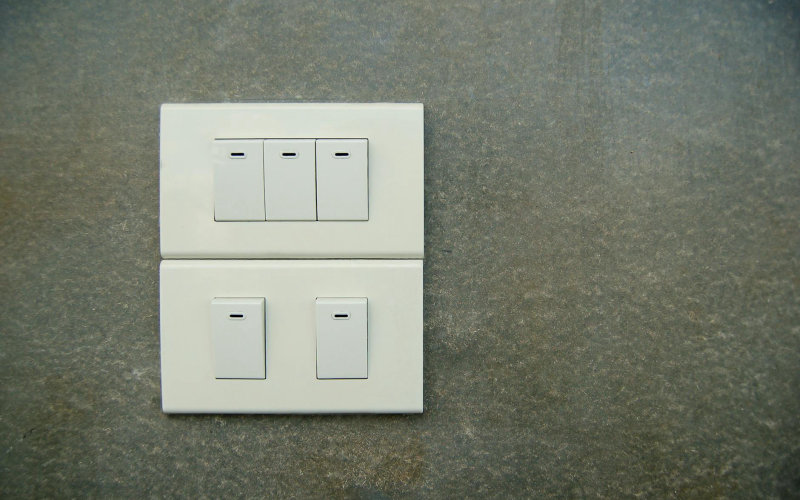

My neighbor called me in a panic last spring. Her light switch had stopped working — the toggle just sat there, dead — and she’d gotten three quotes ranging from $85 to $140 just to swap out a $4 part. I walked over, handed her a flathead screwdriver, and talked her through the whole thing. Twenty-two minutes, start to finish.
That’s the thing nobody tells you: replacing a standard single-pole light switch is genuinely one of the easiest home repairs you can do. No special training. No mysterious electrical knowledge. Just a few tools, a little patience, and the willingness to flip one breaker.
Here’s exactly how to do it.
The One Thing You Must Get Right Before Anything Else
Turn off the power. I know, I know — obvious. But I mean verify it’s off, not just assume it.
Go to your electrical panel (usually in a basement, garage, or hallway closet) and flip the breaker that controls the room you’re working in. Then go back and try the switch. If the light doesn’t respond, good. Now grab a non-contact voltage tester. they run about $12 to $18 at any hardware store, and honestly every home should have one. Hold it near the switch plate. No beep, no light on the tester? You’re safe to proceed.
Skipping this step is how people get hurt. The rest of this is easy. This part is the part that counts.
Step 1, Gather Your Tools (Takes About 3 Minutes)
You need very little here. A flathead screwdriver. A Phillips screwdriver. Your voltage tester. The new switch (take the old one to Home Depot or your local hardware store and match it. you want a single-pole switch, which is what controls a light from one location). Some people grab a roll of masking tape and a pen too, which I’ll explain shortly.
That’s genuinely it.
Step 2, Remove the Switch Plate and Expose the Wires
Unscrew the cover plate (usually two small screws in the center). Set it aside. Now you’ll see a metal box recessed into the wall with the switch mounted inside it. There are two screws. one on top, one on bottom, holding the switch to the box. Remove those, then gently pull the switch straight out toward you. It won’t come all the way out; it’s still connected to wires. That’s fine.
Now here’s where the masking tape trick earns its keep. Before you touch anything, snap a photo with your phone. Seriously. You want a reference if you second-guess yourself later.
Step 3.
Test the Wires One More Time
Even with the breaker flipped, test again. Hold your voltage tester near each wire coming out of the box. No beeping? Perfect. This takes 10 seconds and it’s the kind of habit that keeps DIY from becoming a cautionary story.
Step 4, Disconnect the Old Switch
A standard single-pole switch typically has two screws on the side. brass-colored, with wires looped or clamped around them. Loosen those screws and unwrap or pull the wires free. Some older switches also have a ground wire (green or bare copper) attached to a green screw; note which goes where before you remove it.
If your switch has wires pushed into small holes in the back instead of wrapped around screws. those are called “back-stab” connections, just insert a small flathead screwdriver into the release slot next to each hole and the wire will pop free. Easy.
So now you’re holding the old switch, completely disconnected. Set it aside.
Step 5.
Connect the New Switch
Look at your new switch. Two brass screws on the side. Connect one wire to each brass screw, it doesn’t matter which wire goes on which screw for a basic single-pole switch, since they’re interchangeable. Wrap the wire clockwise around the screw, then tighten snugly. Not gorilla-tight. Snug.
If there’s a ground wire (green or bare copper), connect it to the green screw on the new switch. Most switches sold today include that green screw at the bottom.
And here’s something most guides skip: check for a small tab or label on the switch that says “OFF” with an indicator. That side faces down when you install it, so the switch is in the correct orientation when mounted.
Step 6.
Tuck the Wires and Mount the New Switch
Gently fold the wires back into the box, bend them in a loose accordion fold, not a sharp crunch. and push the switch back into place. Line up the screw holes on the switch bracket with the holes in the electrical box. Thread the screws in by hand first, then tighten with your screwdriver. The switch should sit flush and straight; if it looks tilted, the box ears have small adjustment slots that let you level it out.
Snap the cover plate back on. Two screws. Done.
Step 7, Restore Power and Test
Go back to your panel and flip the breaker back on. Walk to your switch. Toggle it.
Light comes on? You just did electrical work on your own home.
If it doesn’t work, go back and turn the breaker off again before touching anything. Check that both wires are seated firmly under the screws. a loose connection is almost always the culprit. Retighten, reassemble, test again.
What I’d Do If I Were You
Honestly, the first time I replaced a switch I triple-checked everything and still felt slightly terrified flipping that breaker back on. That’s normal. The anxiety doesn’t mean something’s wrong, it means you’re paying attention, which is exactly what you should be doing.
But here’s my actual advice: buy one extra switch. They’re $4. If you fumble something or crack the housing pulling wires loose, you don’t want to make a second hardware store trip. Small insurance. And once you’ve done this once, your second switch takes maybe 8 minutes. because you’ll realize the whole thing is just two screws and two wires, with some confidence added in.
Frequently Asked Questions
What if I see three or four wires instead of two?
That usually means you have a 3-way switch setup (two switches controlling one light). That’s a slightly different wiring configuration. Don’t guess, photograph the wires carefully, or search “3-way switch replacement” separately. Same safety rules apply.
Can I replace a dimmer switch the same way?
Mostly yes, but dimmers require a compatible bulb (check the dimmer’s packaging for wattage and bulb-type specs) and many have an extra ground wire requirement. The process is very similar. just read the dimmer’s included instructions before connecting.
How do I know if my switch is actually broken vs. a bulb problem?
Swap the bulb first. Always. A dead bulb is far more common than a dead switch, and you’ll feel genuinely silly if you rewire something and a fresh $3 bulb would have fixed it.
Photo by Srattha Nualsate on Pexels

