
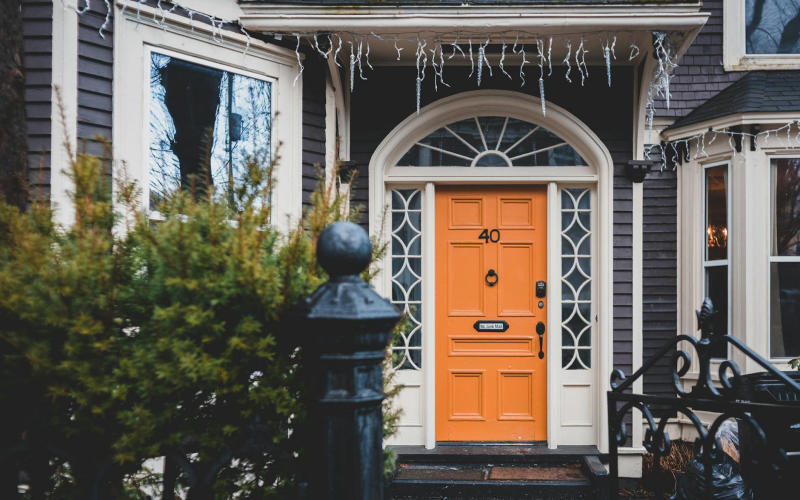

I’ve watched neighbors dump $40,000 into full kitchen remodels and walk away with maybe $28,000 back at resale. Meanwhile, the house down the street sold $18,000 over asking — and the biggest thing the owner did was slap on a new front door and throw down some fresh landscaping. That gap between perception and reality? That’s exactly where curb appeal lives.
First impressions aren’t just social. They’re financial. A 2023 study by the National Association of Realtors found that landscaping improvements alone can recover up to 100% of their cost at resale. Not a typo. And most of these projects don’t require a contractor, a permit, or anything resembling a second mortgage.
So here’s what I’ve actually seen work — seven upgrades that deliver genuine return, ranked loosely by impact and accessibility. No gut renovations. No structural drama.
1. Fresh Exterior Paint (or Even Just Trim Paint)
A full exterior repaint runs between $1,800 and $4,400 for an average-sized home, depending on your region and who you hire. But here’s the thing — you don’t always need the whole house. Sometimes repainting just the trim, shutters, and front door triples the visual impact at a quarter of the price.
Color matters enormously. A 2018 Zillow analysis (replicated about a dozen times since, for what it’s worth) found that homes with black or charcoal front doors sold for an average of $6,271 more than comparable homes. Black front doors. That’s genuinely it.
Pick a palette that fits your neighborhood without vanishing into it. Soft whites, warm grays, navy — all safe bets. But I’ve also watched a well-chosen sage green turn a completely forgettable colonial into the most-photographed house on the block.
2. Driveway and Walkway Pressure Washing
This one costs almost nothing. Renting a pressure washer runs around $50 to $100 per day, or you can hire someone for $150 to $300 depending on square footage. And honestly? The transformation is shocking the first time you see it.
Concrete driveways collect years of oil stains, algae, and oxidation. They don’t just look old — they look neglected. And buyers, consciously or not, conflate “neglected” with “problems.” One clean driveway doesn’t only look better; it signals that the whole property has been cared for. That signal is worth real money.
Do this before listing photos. Before open houses. Before any showing, full stop.
3. Strategic Landscaping (Not the Expensive Kind)
You don’t need a landscape architect. What you actually need is clean edges and intentional planting. That’s basically it.
Edge your lawn where it meets the driveway and walkways. Add a 2-inch layer of fresh mulch to your beds — bags run about $4 to $6 at any hardware store, and most front yards need maybe 10 to 15 of them. Plant a few perennials at varying heights near the entry. That’s genuinely most of what “great curb appeal landscaping” means in practice.
The NAR’s 2023 Remodeling Impact Report put standard lawn care and landscape upgrades at recovering 83% to 100% of costs — frequently the highest ROI category in the entire exterior section. So if you’re choosing between new gutters and fresh mulch, spend the $80 on mulch first. It’s not even close.
4. Exterior Lighting Upgrades
Path lights. Porch sconces. A little uplighting on a statement tree. These aren’t luxury add-ons — they’re basic visual anchors that buyers notice, whether they consciously register it or not.
Good exterior lighting does two things well: it makes a home feel intentional (designed, not just built), and it creates warmth that photographs beautifully. Solar-powered path lights have gotten genuinely impressive over the last three years. Brands like LITOM and Aootek now put out fixtures that stay bright for 8 to 10 hours and cost $25 to $40 for a six-pack.
And don’t sleep on replacing an outdated porch light. A $60 matte black sconce from Home Depot swapped in for a 1990s brass fixture makes the entire entry feel a decade newer. Instant upgrade.
5. Front Door Replacement or Refinishing
I already mentioned black doors commanding a premium. But the upgrade doesn’t have to mean full replacement. Refinishing an existing solid wood door — stripping, sanding, repainting or restaining — costs maybe $150 in materials and a weekend afternoon.
If replacement is on the table, steel entry doors are the ROI kings here. Remodeling Magazine’s 2024 Cost vs. Value Report ranked steel door replacement as one of the top-returning projects in the entire home improvement category, recovering around 100.9% of costs nationally. That’s one of very few projects that actually pays for itself on paper.
New hardware helps too. A $40 brushed nickel or matte black handle set, a matching kickplate, a clean house number in a legible font — suddenly your entry looks like it belongs in a shelter magazine.
6. Garage Door Replacement
This one surprises people every time. But Remodeling Magazine’s 2024 report consistently ranks garage door replacement as the number one ROI project for home exteriors, with an average return of around 193% of cost in some U.S. markets. That’s not a rounding error — that’s extraordinary.
A mid-range garage door runs $800 to $1,500 installed. And on most homes, the garage door occupies 30 to 40% of the front facade’s visual real estate. An old, dented, builder-grade door drags everything down with it. A clean, paneled door — especially carriage-house style — lifts the whole exterior dramatically.
But if full replacement isn’t in the budget right now, at minimum get the existing door repainted. A gallon of exterior trim paint, a weekend morning, a roller. Enormous difference for maybe $35.
7. Window Boxes and Container Gardens
This is the underrated one. Window boxes and large container planters at the entry add color, dimension, and life — and they’re affordable, removable, and require zero structural commitment.
A pair of 24-inch window boxes with brackets runs about $60 to $120. Fill them with seasonal plants — trailing ivy, calibrachoa, ornamental grasses for texture — and you’ve created something buyers respond to emotionally. Not logically. Emotionally. That’s where purchase decisions actually get made.
Large decorative planters flanking the front door do the same job. Go with something that has visual weight — stone composite or dark ceramic rather than flimsy plastic. And keep them filled. Dead plants in a planter are genuinely worse than no planter at all.
Bottom Line
Here’s what nobody says out loud: most buyers can’t envision potential. They can only react to what’s right in front of them. So the real strategy behind curb appeal upgrades isn’t “make the house look nicer” — it’s “remove every reason for someone to talk themselves out of a full-price offer before they even walk through the door.”
Each of these seven upgrades reduces friction in that psychological negotiation. None require a renovation budget. And all of them together can shift your home from “we’ll keep looking” to “let’s write an offer.” That’s the actual transaction you’re making when you spend $80 on mulch and $60 on a new door handle.
Frequently Asked Questions
How much do curb appeal upgrades typically cost?
Most of the upgrades on this list fall between $50 and $1,500 depending on scope. Pressure washing and mulching are the cheapest entry points. Garage door replacement is the priciest — but also carries the highest documented ROI of anything on this list.
Do curb appeal improvements actually increase appraisal value?
They can, but it depends on the appraiser’s methodology. Where curb appeal upgrades most reliably pay off is in buyer perception — faster sales, fewer lowball offers, and higher final sale prices in competitive markets.
What’s the single best curb appeal upgrade for the money?
In my experience: fresh mulch plus a repainted front door. Combined cost is often under $200, and the visual impact rivals projects that cost ten times as much. Start there and see what else you need.
When should I do these upgrades before selling?
Ideally 2 to 4 weeks before listing. That gives you time to fix anything that doesn’t go as planned — and lets the plants settle enough to look established rather than freshly thrown together the morning before photos.
Photo by Erik Mclean on Pexels

