
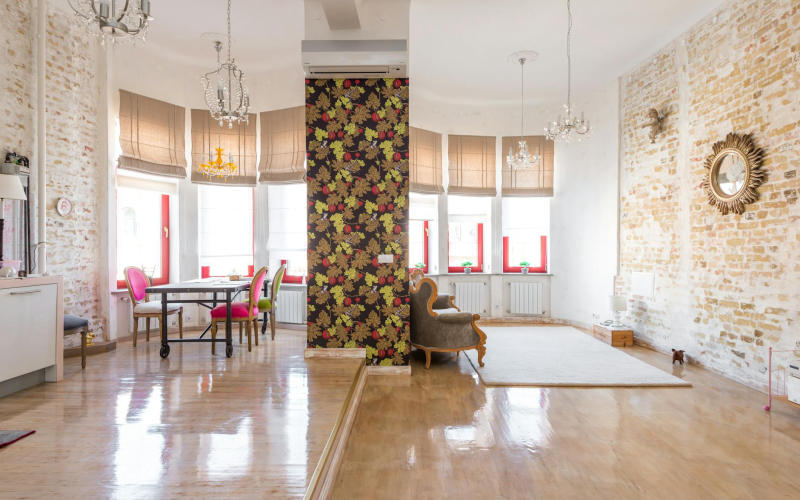

I walked into a friend’s new apartment a few years back, and everything matched. Like, everything. The sofa, loveseat, coffee table, end tables — all from the same Pottery Barn collection, all in the same espresso finish, all bought on the same Saturday afternoon. It looked expensive. It also looked completely lifeless. Like a hotel lobby waiting for guests who’d never actually stay.
Here’s what nobody tells you when you’re standing in a furniture showroom: those matching sets are designed to sell, not to live in. Showrooms arrange furniture in coordinated collections because it makes purchasing decisions easier. Simple as that. It has nothing to do with what makes a home feel warm, interesting, or genuinely yours.
Mixing furniture styles interior design isn’t just some trend Instagram picked up in 2019 and will quietly abandon by 2025. It’s actually how humans have always furnished homes — accumulating pieces over time, inheriting things, making do, falling hard for a random chair at a flea market. The “everything matches” era was the weird blip in that history. And we’re finally moving past it.
Your Brain Literally Gets Bored By Perfect Matching
There’s actual science behind this. Visual cortex research from the University of Toronto published in 2021 showed that the human eye fatigues faster when scanning environments with high visual repetition. Basically? Sameness is boring, and your brain figures that out within seconds.
When every piece shares the same finish, the same legs, the same scale — your eye has nowhere to go. It clocks the room in about three seconds and moves on. But introduce a vintage rattan chair next to a sleek linen sofa, or a brass lamp beside a raw wood table, and suddenly there’s a conversation happening. Your eye moves. It explores. The room feels bigger, richer, more alive.
This is exactly why even the most expensive matching bedroom sets can feel cheaper than a thoughtfully curated mix of individual pieces. Scale, texture, and contrast do more for a room than $4,000 worth of coordinated mahogany ever will.
The Showroom Trap (And Why It’s So Easy to Fall Into)
Furniture retailers aren’t evil. But they’re absolutely motivated by selling you more pieces in a single transaction, and the matched set is the perfect vehicle for that. The Rooms To Go business model — which generated approximately $1.8 billion in revenue in 2022 — is built almost entirely on the promise of effortless coordination.
And honestly, it works because buying a matched set feels safe. No decisions. No risk. You point, you pay, it arrives, it fits together. The anxiety of “will this go with that?” just disappears.
But safe isn’t interesting. And “goes with that” isn’t the same as “looks incredible.”
What “Mixed” Actually Means (It’s Not Just Random)
So here’s where people panic. They hear “don’t match your furniture” and they picture a chaotic jumble of competing styles making every guest quietly uncomfortable. That’s not what I’m talking about.
Mixing well requires a unifying thread — one consistent element that ties disparate pieces together. It could be a color running through the room (even neutrals work: cream, black, natural wood tones). It could be a consistent leg style. It could be material — mixing different silhouettes but keeping mostly matte finishes, for example.
Interior designer Nate Berkus has talked about this for years: the goal isn’t randomness, it’s intentional tension. A room should have pieces that seem like they shouldn’t work together but somehow absolutely do. That tension is what makes a space feel styled rather than purchased.
A specific formula I’ve used and seen work repeatedly: anchor with one large neutral piece (usually the sofa), bring in two accent chairs in different styles but from a similar era or material family, then use lighting and accessories to create the connective tissue.
The Era-Mixing Rule That Actually Works
One of the most reliable tricks in mixing furniture styles interior design is what I’d call the “two eras, one decade apart” approach. Pick a primary style — say, mid-century modern — and then deliberately introduce pieces from the 1980s or the early 2000s alongside it.
Why does this work? Because the design languages are close enough to share some DNA — proportions, material preferences, scale — but different enough to create genuine visual interest. A 1960s Eames chair beside a 2003 Philippe Starck Ghost Chair reads as curated and sophisticated. The same Eames beside another Eames just reads as a showroom.
The absolute sweet spot most designers I’ve talked to agree on? Pair something old with something new. Antique side table next to a contemporary sofa. Vintage rug under a minimalist dining set. The contrast between patina and clean lines is almost always visually compelling — there’s something about it that just works.
Stop Buying the Matching Rug
This one specifically. Furniture sets that “come with” a coordinating rug are almost always a mistake. The rug ends up being the most matchy-matchy element in the room and it flattens everything.
Rugs should introduce something the rest of the furniture doesn’t have. Different texture. An unexpected color that picks up something subtle in the art on the walls. A pattern that plays against the clean lines of a contemporary sofa rather than just repeating them.
In 2023, the average American household spent around $847 on area rugs per renovation cycle, according to the Floor Covering Industry Association. That’s real money. Spend it on something that adds contrast, not coordination.
When Matching Actually Makes Sense
I’ll be honest: there are spots where matching is totally fine. Dining chairs, for instance — six different chairs around a dining table tends to read as unfinished rather than curated, unless you’re exceptionally deliberate about it. Bedside tables in a bedroom? Symmetrical matching usually works well because symmetry reads as intentional, not lazy.
But the living room sofa and loveseat combo? The matched bedroom suite with the coordinating dresser, nightstands, AND headboard all in the same wood finish? That’s where matching starts actively killing your design.
Bottom Line
Here’s what I genuinely believe after years of thinking about this: the matched furniture set doesn’t just make rooms look boring — it makes them look temporary. Like you’re camping out. Like you moved in and just stopped. Rooms that feel like actual homes have evidence of time in them — decisions made at different moments in life, things inherited or found or bought specifically because you loved them, not because they came in the same box.
The real secret of mixing furniture styles interior design isn’t about finding the perfect eclectic combination. It’s about giving yourself permission to accumulate a room instead of purchasing it all at once. And that permission? Worth more than any matching set ever will be.
Frequently Asked Questions
How do I start mixing furniture styles without it looking messy?
Pick one unifying element first — a consistent color, material, or scale — and use it as your anchor. Everything else can vary from there. Visual chaos usually comes from having no connective thread, not from having too many different styles.
Can modern and traditional furniture actually work together?
Yes, and often beautifully. The key is proportion. A traditional wingback chair works next to a modern sofa if they’re similar in height and visual weight. Scale mismatches cause more problems than style mismatches ever will.
How many furniture styles should I mix in one room?
Two to three distinct influences is the sweet spot. One is boring. Four or more starts feeling like a storage unit. Three styles with a common thread — say, mid-century, industrial, and Scandinavian, all united by natural wood tones — is usually more than enough to create a genuinely interesting room.
Is it okay to buy one matching set and build from there?
Absolutely. Start with that neutral sofa or that dining table set if it makes the budget and logistics easier. Just don’t stop there. Add pieces from different sources over time. Let the room evolve. That evolution is exactly what makes it look designed rather than delivered.
Photo by Max Vakhtbovych on Pexels

