

Hey, Posse! It’s Alex — and today we need to talk about something that is QUIETLY sabotaging your home design, and most people have absolutely no idea it’s happening.
You spent hours (maybe weeks) picking the perfect paint color. You curated the furniture. You found that one rug that pulled everything together. And yet… something still feels off. The room looks a little cramped. A little muddy. A little blah. Sound familiar?
Here’s what I bet nobody told you: your light bulbs are probably the problem. Specifically, those cozy warm white bulbs you’ve been defaulting to because everyone said they’d make your home feel “inviting.” Yeah. We need to unpack THAT advice right now.
The Real Reason Warm White Bulbs Make Rooms Look Smaller
Here’s the thing about warm white light — typically anything sitting around 2700K to 3000K on the color temperature scale. It casts a yellowish, amber glow over everything in your room. And that glow? It absorbs contrast.
Contrast is what your eye uses to read depth. When a wall’s shadow edge blurs into the floor because everything is bathed in the same golden haze, your brain literally cannot calculate where the space ends. The room compresses. Visually, it shrinks. This is why so many warm-lit rooms feel cozy in a “tucked in tight” way rather than an “open and airy” way — and if your goal was spacious and editorial, that’s a MASSIVE problem.
I redesigned my own living room back in early 2025 and couldn’t figure out why my fresh Farrow & Ball “Elephant’s Breath” walls looked flat and almost greenish. Swapped a single fixture from 2700K warm white to a 4000K neutral white. The wall color came ALIVE. I genuinely stood there with my mouth open.
What Warm Light Does to Your Paint Colors (This One Hurts)
Okay, this is the part that makes interior designers quietly wince. Every paint color has undertones. blues, greens, pinks, purples. Your warm white bulbs suppress the cool undertones in paint completely and push the warm ones into overdrive.
So that soft greige you picked? Under warm white light, it slides toward muddy brown. Your crisp white trim? It yellows. Your pale blue accent wall? It reads as gray-green, which is probably NOT the vibe you were going for.
And the duller your finishes already are, matte paint, natural linen, raw wood. the worse this effect gets. Warm light flattens texture. It turns dimension into sameness. Your beautifully layered room ends up looking like one beige blob, and you’re left wondering why the Instagram version of your design looked so much better.
The Color Temperature Sweet Spot Most Guides Skip
So what’s the fix? I want to give you a REAL answer here, not just “use cooler bulbs” and call it a day.
For most living rooms and bedrooms where you want atmosphere but NOT the shrinking effect, 3000K to 3500K is the sweet spot. You still get warmth. You still feel comfortable. But you retain enough clarity that your colors read true and your room holds its shape.
Kitchens and home offices? Go 4000K. Full stop. The crispness is a feature, not a flaw, and you’ll actually be able to see what you’re doing.
Now, if you’re going for a gallery-style or modern minimalist look, 4000K to 4500K throughout is genuinely stunning. Crisp, clean, zero yellowing. Most design-forward boutique hotels shifted to this range between 2023 and 2025 precisely because guests kept commenting that the rooms felt larger and more premium.
Why “Cozy” Became a Design Trap
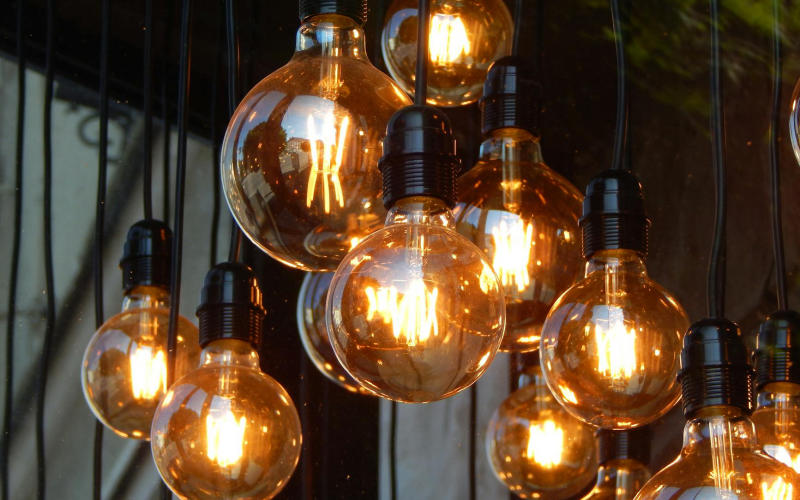
Here’s my slightly spicy take: the obsession with warm white bulbs came from a very specific 2010s aesthetic. think Kinfolk magazine, raw wood everything, Edison bulbs hanging from exposed ceilings. That look INTENTIONALLY wanted a dim, amber, intimate feel. Fine. Great. But that aesthetic got generalized into “warm light = good light,” and now it’s being applied everywhere, regardless of the design intent.
If your room is Scandinavian-influenced, bright and white, high-contrast, or modern maximalist, warm white is actively working against you. It’s like wearing a cozy sweater to a black-tie event. Wrong tool entirely.
And the worst part? Because warm light is SO widely recommended, most people never even question it. They just keep buying the same 2700K bulbs and wondering why their room never quite matches the vision in their head.
Layered Lighting Changes Everything
Before you run out and swap every bulb to 4000K. hold on. Because bulb color temperature is only part of the equation.
The OTHER thing that makes warm-only rooms look small is the absence of layered lighting. If you have one overhead fixture bathing everything in the same intensity, your room has no visual hierarchy. No depth. No drama. It’s flat, regardless of the bulb color.
The fix is layers: ambient light (your overhead), task light (lamps, under-cabinet strips), and accent light (directed at art, shelving, architectural features). When you combine a slightly cooler ambient source, say, 3500K overhead. with warmer 2700K accent lamps in corners, you get depth. You get dimension. Your eye travels around the room instead of hitting a wall of uniform glow and stopping.
Lighting designer Lindsey Adelman has talked about this principle for years, and honestly, it’s the single most underused tool in residential design. Three light sources at different heights and intensities will do more for your room than any furniture purchase.
Bulb Wattage Isn’t the Same as Color Temperature
Quick but important. I cannot tell you how many times I’ve seen people confuse these two things.
Wattage (or lumens in LED-speak) controls brightness. Color temperature, measured in Kelvin. controls the tone of the light. You can have a bright, powerful bulb at 2700K and it will STILL wash your room in amber. Turning it up doesn’t fix the color problem. It just makes the amber brighter.
So when you’re shopping: look at the Kelvin number on the box, not just the lumen output. A 800-lumen bulb at 4000K will do more for your room’s perceived size than a 1100-lumen bulb at 2700K. Every time.
What I’d Actually Do If I Were Redesigning Your Room
Start with your main overhead fixture and swap it to 3500K or 4000K. Just that one change. Live with it for a week and I PROMISE you will see your paint color, your furniture, your whole room differently.
Then layer in 2700K for accent lamps in the corners. This combination, cooler overhead, warmer accents. is what gives high-end interiors that “photographed beautifully and feels amazing in person” quality. It’s not magic. It’s just intentional.
The honest truth is that understanding why warm white bulbs make rooms look smaller is the first step toward actually fixing it, and it costs you about $18 in new bulbs to test. That’s a ridiculously low-risk way to transform a space you’ve already invested so much into. Go try it this week. Report back.
Photo by Tetiana Dubik on Pexels

