

I killed my first garden. Completely. Every single plant.
It was 2011, I had maybe 80 square feet of patchy backyard in a rental house in Ohio, and I planted everything wrong—wrong depth, wrong spacing, wrong season. By July I had one sad tomato and a mountain of regret. But I kept going. And now I grow more food than my family can actually eat, all from a patch roughly the size of a large living room rug.
Here’s what nobody tells you upfront: small spaces aren’t a disadvantage. They’re genuinely easier to manage, easier to water, and nowhere near as overwhelming as those sprawling Pinterest garden plots. You don’t need half an acre. You need a plan, halfway decent soil, and some patience.
Start With an Honest Look at Your Space
Walk outside right now. Look at where the sun actually hits.
Most vegetables need a minimum of 6 hours of direct sunlight daily—tomatoes and peppers want 8. So before you buy a single seed packet, spend one day watching your yard. I mean actually watching it. Note where the sun falls at 9am, noon, and 3pm. That one afternoon will save you months of frustration.
If your sunniest patch is only 6×8 feet, that’s 48 square feet. Which is genuinely enough to grow lettuce, radishes, kale, one tomato plant, and a couple of pepper plants—comfortably. Don’t let the size discourage you. Constraint forces creativity.
Also check your drainage. Dig a small hole, pour in a gallon of water, and see how fast it disappears. Still sitting there 4 hours later? You’ve got drainage problems that need fixing before anything goes in the ground.
Build Your Soil Before Anything Else
Bad soil wrecks even the best plan. Good soil forgives almost every other mistake.
For a beginner vegetable garden in a small backyard, I always recommend starting with raised beds. A 4×8-foot cedar raised bed (cedar resists rot naturally, usually lasting 10-15 years) runs roughly $60-$100 in lumber depending on where you live. You fill it yourself with a mix that’s about one-third compost, one-third topsoil, and one-third perlite or coarse sand for drainage. This approach—popularized by Mel Bartholomew’s “Square Foot Gardening” back in 1981—consistently outperforms digging up and amending native soil for new gardeners. It just does.
Skip the cheap bagged garden soil. It compacts badly. Spend the extra $15 on quality compost from a local garden center, or better yet, check whether your city has a municipal compost program. Denver’s program gave away 4,000 tons in 2023 alone. Many cities offer it free or at steep discounts.
Pick the Right Plants for Your First Season
This is where most beginners go sideways. They try to grow everything.
Pick 5 or 6 things. Seriously. A successful small harvest beats a complicated failure every time.
For spring and fall, you want cool-weather crops: lettuce, spinach, kale, radishes (radishes go from seed to table in 25 days, which is genuinely satisfying), and snap peas. For summer, stick with cherry tomatoes rather than big heirloom varieties your first year. ‘Sun Gold’ cherry tomatoes are borderline foolproof, wildly productive, and taste better than most grocery store tomatoes by a wide margin. Throw in one or two basil plants near the tomatoes, one zucchini plant (just one—you’ll thank me come August), and maybe some green beans.
And skip melons. Watermelons and cantaloupes eat up massive amounts of space and need a long growing season. They’re a year-three crop, not year one.
Learn the Basics of Spacing and Vertical Growing
Tight space means you can’t just throw plants wherever. Spacing actually matters.
The Square Foot Gardening method divides your bed into 1-foot squares and assigns plant density per square—16 radishes per square, 1 tomato per square, 4 lettuce plants per square. It’s a little rigid, but it’s a useful framework when you’re just starting out. After a season or two, you develop your own instincts.
Vertical growing is your best friend in a small backyard. A 6-foot cattle panel trellis—the kind farmers use for livestock fencing, available at farm supply stores for about $25—can support 8 to 10 cucumber plants or a full row of pole beans against a fence. You’re growing upward instead of outward. I turned an ugly chain-link fence line into a cucumber wall one summer, and it produced more cucumbers than I knew what to do with.
Water Smarter, Not More
Overwatering kills more beginner gardens than drought does. It’s not even close.
Most vegetables want about 1 inch of water per week. But “1 inch” means almost nothing to people who’ve never measured it. So try this: put an empty tuna can in your garden. When it’s full, you’ve applied roughly 1 inch of water. Simple, effective, free.
A basic drip irrigation kit for a 4×8 raised bed runs about $30-$40 at most home improvement stores, and it’s worth every penny. Drip irrigation delivers water directly to roots, keeps foliage dry (wet leaves invite fungal disease), and cuts water use by up to 50% compared to overhead sprinklers, according to EPA WaterSense program data.
So if you make one infrastructure upgrade your first year, make it drip irrigation. Not a fancy tool set. Not a compost tumbler. Water delivery.
Don’t Ignore Pests—But Don’t Panic Either
Something will eat your plants. Accept this now.
The most common vegetable garden pests across North America are aphids, caterpillars (specifically cabbage loopers and tomato hornworms), and squash bugs. Aphids you can blast off with a garden hose. Tomato hornworms you pick off by hand—they’re big, slow, and honestly kind of fascinating in a gross way. Neem oil, a naturally derived pesticide, handles most soft-bodied insect problems and costs about $12 for a concentrate that’ll last two full seasons.
But don’t reach for chemical pesticides reflexively. Broad-spectrum insecticides wipe out beneficial insects—bees, predatory wasps, lacewings—that would otherwise be doing pest control for you, for free.
Bottom Line
Here’s what I genuinely never see anyone say plainly: your first vegetable garden is not supposed to be efficient. It’s supposed to teach you your specific yard. Every garden is hyperlocal—your microclimate, your soil bacteria, your particular aphid pressure, your drainage quirks. This guide (or any guide) gets you maybe 70% of the way there. The other 30% comes from paying attention to what actually happens in your specific 80 or 100 square feet over one full growing season.
Keep a cheap paper notebook. Write down what you planted, when, and what happened. That notebook will eventually be worth more than any gardening book you’ll ever buy. Because it’s written for exactly one garden: yours.
Frequently Asked Questions
How much space do I actually need to start a vegetable garden?
You can grow meaningful amounts of food in as little as 32 square feet (a 4×8 raised bed). That’s enough for salad greens, radishes, one tomato plant, and herbs. More space is nice, but you don’t need it to start.
What vegetables are easiest for beginners in a small backyard?
Lettuce, radishes, cherry tomatoes (especially ‘Sun Gold’ or ‘Sweet 100’ varieties), zucchini, green beans, and herbs like basil and chives. These are forgiving, fast, and rewarding for first-time growers.
When should I start my vegetable garden?
It depends on your USDA hardiness zone, but as a general rule: start cool-weather crops 4-6 weeks before your last frost date in spring, and warm-weather crops like tomatoes and peppers after your last frost date has passed. The Old Farmer’s Almanac website has a free frost date calculator by zip code.
Do I need to use raised beds or can I just dig up my lawn?
Both work. But for beginners with unknown soil quality, raised beds are almost always the better starting point—you control the soil mix, drainage is better, and weeds are significantly easier to manage. If your native soil is decent and well-draining, in-ground planting is a perfectly valid option after a soil test.
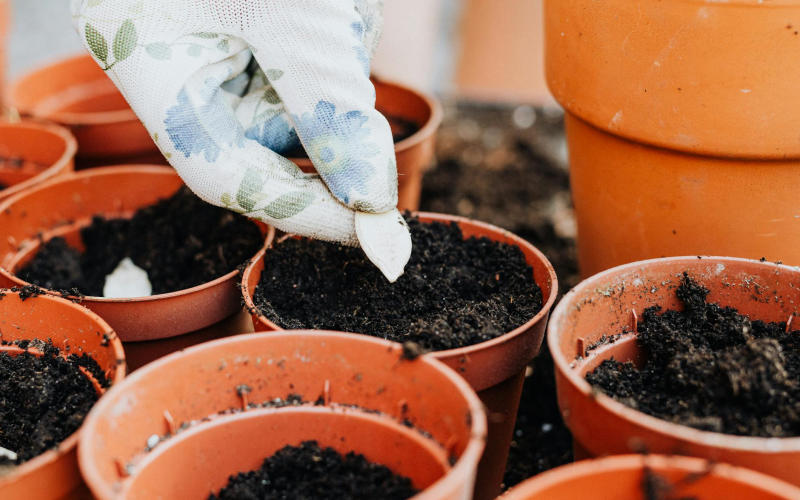
Photo by www.kaboompics.com on Pexels

