

I’ve rearranged my bedroom four times in three years. Not because I’m indecisive—because I kept making the same dumb mistakes that turned a perfectly decent 120-square-foot room into something that felt like a storage closet with a bed shoved in it.
Small bedrooms don’t have to feel small. That sounds like something you’d stitch onto a throw pillow, I know. But it’s genuinely true. The gap between a cramped room and a cozy-but-functional one usually comes down to a handful of very fixable layout calls that most people get wrong without ever noticing.
So here are the nine small bedroom layout mistakes I see constantly—in my own home, in friends’ apartments, in every “help me fix my room” post on r/malelivingspace and r/femalelivingspace. Each one has a real solution.
1. Pushing Every Piece of Furniture Against the Wall
Feels logical. It isn’t. When everything hugs the perimeter, the center of the room turns into this awkward dead zone that actually makes the space feel more hollow—like a gymnasium, not a bedroom.
Pull your bed 2-3 inches from the wall, or angle a small chair slightly off the corner. That visual tension between furniture and walls is what creates intimacy. Interior designer Bobby Berk has talked about this repeatedly: floating furniture reads as intentional, not crammed.
2. Choosing a Bed That’s Too Big for the Room
I know you want the king. I wanted the king too. But a king bed in a 10×10 room leaves you roughly 18 inches of clearance on each side—below the 24-inch minimum most designers recommend for comfortable movement.
Downsizing from a king to a queen can recover 16 square feet of floor space. Sixteen. That’s the difference between stumbling to your alarm clock and actually walking to it. And if you’re absolutely set on sleeping big, look at low-profile bed frames. They compress visual height and make ceilings feel taller.
3. Ignoring Vertical Space Completely
The floor isn’t your only option. But most people treat it like it is.
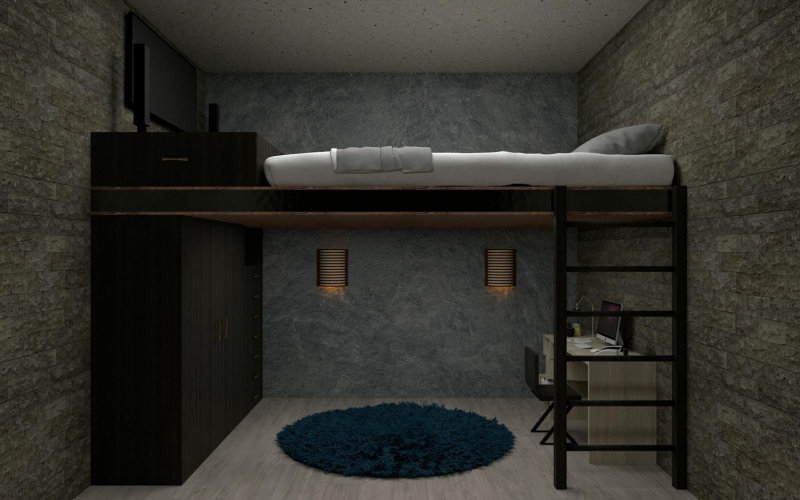
Walls above 60 inches are basically unused real estate in the average bedroom. IKEA’s PAX wardrobe system goes up to 93 inches—nearly ceiling height in most apartments—and swapping squat dressers for full-height storage can free up 4-6 feet of floor space depending on your layout. Mount floating shelves above your headboard. Stack your storage. Think like you’re packing a carry-on, not a checked bag.
4. Using One Overhead Light as Your Only Source
Bad lighting makes small spaces feel like interrogation rooms. Harsh overhead light flattens everything, kills depth, and makes every corner look smaller than it actually is.
Layered lighting—a warm bedside lamp, a sconce or two, something low and soft—creates the illusion of distinct zones within a small room, which paradoxically makes the whole thing feel bigger. A 2019 piece in Architectural Digest specifically called out single-source lighting as one of the top reasons small rooms feel oppressive. Honestly, a $25 plug-in sconce from Target can change how your entire room reads.
5. Blocking Natural Light With Heavy or Badly Placed Curtains
You’d be amazed how often people mount curtain rods directly on the window frame. Don’t do this. Mount them 4-6 inches above the frame and extend the rod 8-12 inches on each side. Your window will look dramatically larger, and you’ll get maximum light when the curtains are open.
Heavy blackout curtains bunched over a small window are basically a light-blocking crime. If you need blackout functionality (and a lot of us do), get a blackout liner and pair it with sheer linen drapes. Best of both worlds. Your room will look like it has windows the size of a small sedan instead of a bathroom porthole.
6. Choosing the Wrong Rug Size (Usually Too Small)
This one’s genuinely painful to see. A tiny rug floating in the middle of a bedroom looks like someone dropped a doormat and forgot about it.
Go bigger than your instincts say. An 8×10 rug under a queen bed—with at least 18 inches extending past each side—grounds the room and makes the whole floor plan feel intentional. Interior stylist Emily Henderson wrote about this in 2021: the most common rug mistake in bedrooms isn’t overspending, it’s under-sizing. A larger rug in a small room doesn’t crowd it. It anchors it.
7. Using Bulky, Opaque Furniture Throughout
Solid wood dresser. Solid wood nightstands. Solid wood bench at the foot of the bed. Every piece blocking sightlines, every piece consuming visual space.
Swap one or two pieces for something lighter—a lucite nightstand, a metal-legged bed frame, open shelving instead of a closed dresser. When your eye can travel through or under a piece of furniture, the room breathes. This isn’t a minor tweak, either. It’s one of the fastest ways to make a cramped room feel genuinely airier without touching a single wall.
8. Placing the Bed Directly in Front of the Door
Walking into a bedroom and immediately facing the foot of the bed is a feng shui issue, sure. But it’s also just spatially awkward—it cuts the room in half visually before you’ve even stepped fully inside.
Where possible, position the bed on the wall adjacent to the door, not opposite it. This opens up your sightline the moment you enter, makes the room feel longer, and gives you a proper sense of arrival rather than collision. Some floor plans genuinely don’t give you a choice. But if you have two options, the adjacent placement almost always wins.
9. Forgetting That Clutter Is a Layout Problem Too
People treat clutter like a housekeeping issue. It’s not. It’s a storage layout issue. If your surfaces are always drowning in stuff, you haven’t made a mess—you’ve built a layout that doesn’t support how you actually live.
So build clutter into your design. Under-bed storage drawers. A storage ottoman instead of a plain one. Nightstands with actual drawers, not just a decorative shelf. The Container Store’s Elfa system—installed in my own closet back in 2022—cut my visible bedroom clutter by probably 70% without changing a single habit. Give everything a specific home and the room stays clear almost automatically.
Bottom Line
Here’s something I haven’t seen anyone else say about small bedroom layout mistakes: most of them are really confidence problems, not space problems. People buy oversized furniture, push everything to the walls, and pile on heavy curtains because they’re subconsciously trying to make a small room look “serious.” Like a sparse room means a failed room. But small bedrooms actually reward restraint more than any other space in a home—every piece you remove makes the pieces you keep look more deliberate. The fix isn’t always addition. Sometimes it’s just having the nerve to take something away.
Frequently Asked Questions
How do I make my small bedroom feel bigger without renovating?
Focus on the three fastest wins: mount curtains high and wide, swap one bulky furniture piece for something visually lighter, and add a second light source. You’ll feel the difference the same day.
What’s the best bed size for a small bedroom?
A queen in a room that’s at least 10×10 feet is usually the sweet spot. For rooms smaller than that, a full-size bed with a low-profile frame works well and leaves you functional floor space.
Should I use dark or light colors in a small bedroom?
Light colors open up space, but don’t be afraid of one dark accent wall—specifically behind the headboard. It adds depth and makes the room feel more designed, not smaller.
How much floor space should I have around my bed?
Aim for at least 24 inches on the sides you’ll be walking past daily, and 36 inches at the foot if you have room. Below 18 inches starts to feel genuinely uncomfortable over time.
Photo by Pușcaș Adryan on Pexels

