
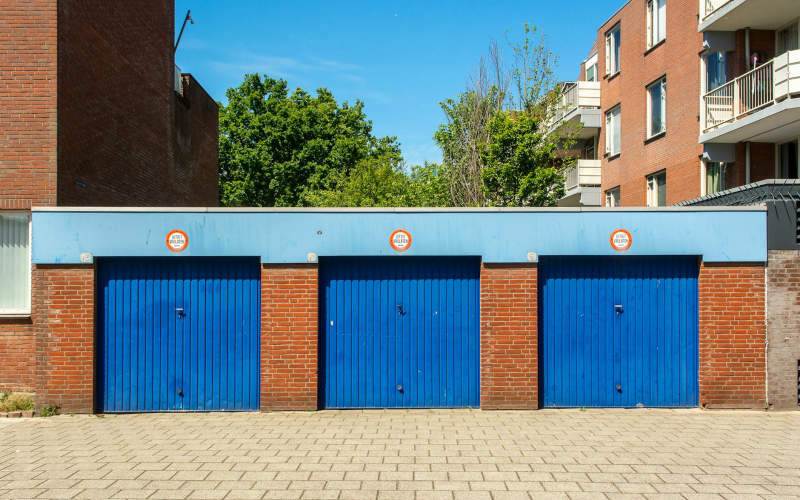

My neighbor called me in a panic last October. Her garage door had quit entirely, and she’d already gotten a quote from a service company: $340 just to show up. I walked over, poked around for maybe 25 minutes, and fixed the whole thing with a $4 can of lubricant and a screwdriver.
Here’s what the garage door industry would rather you not figure out: a surprising number of common failures have nothing to do with the springs. Springs get all the blame — and yes, torsion and extension springs are genuinely dangerous, storing enough tension to kill or seriously injure you if they snap. Don’t touch them. But the repairs you can handle yourself? That list is longer than most people assume.
So I put this together based on actual repairs I’ve done, watched people do, and researched obsessively over the years. No fluff. Just the real stuff.
1. Dead or Misaligned Safety Sensors
Probably the most common call I hear about. Your door drops two inches, then shoots back up. Or it refuses to close at all unless you hold the wall button down the entire time.
Nine times out of ten? The safety sensors near the floor are either dirty or misaligned. Two small units, mounted roughly 6 inches off the ground on each side of the door track — one shoots an infrared beam, the other catches it. When they’re even slightly off (or when a spider decides that lens is prime real estate, which happened to me twice in 2022), the door assumes something’s blocking it.
Fix: Loosen the sensor bracket screws a little, nudge them until the indicator light goes solid, retighten. Wipe the lenses with a dry cloth. Under 10 minutes. Zero dollars.
2. Worn or Cracked Weather Stripping
People ignore this one for years, then act puzzled when their garage smells like a rainstorm and their heating bill creeps up $60 every winter month.
The bottom seal and the perimeter weather stripping are completely replaceable — no mechanical aptitude required. A universal bottom seal (T-slot style, the most common) runs $15-$25 at Home Depot. Slide the old one out, slide the new one in. Done. Side and top stripping is typically just nailed or stapled into the door frame — pull the old material off, press the new foam or rubber strip in, staple it back. I did my whole garage door perimeter in 2021 for about $38 in materials, and I noticed the difference the very first cold night.
3. Stripped or Damaged Roller Hardware
Rollers are those small wheeled pieces that ride along the metal tracks. Nylon rollers — the quieter, more modern variety — typically last 8 to 12 years. Steel rollers go longer but announce themselves loudly when they’re failing.
When a roller cracks, chips, or pops completely out of the track, your door either jams or starts grinding in a way that makes you wince. Replacing them isn’t complicated: clamp locking pliers on the track just above the roller you’re swapping, pop the old one out of the hinge bracket, press the new one in. Work your way down each side. A set of 10 nylon rollers costs $20-$35 on Amazon. I used Ideal Security Inc. branded rollers in 2023 and haven’t heard a peep since. Just don’t mess with the bottom roller bracket — that one connects directly to the spring cables.
4. Broken or Loose Hinges
Garage door hinges crack. Especially on older steel doors that’ve been cycling four to six times a day for a decade. You’ll usually hear knocking or notice the door flexing awkwardly through the middle of a panel.
Hinges are numbered, and the ones between panels are typically #1 or #2 — safe to replace yourself. Support the panel, pull the two bolts, swap the hinge. Replacement sets run about $10-$15. A Milwaukee Tool combination socket set makes this roughly an 8-minute job.
5. Opener Remote or Keypad Not Working
I know this sounds too obvious to mention. But before you convince yourself the opener is dead, check three things first: swap the battery in the remote (CR2032 is the common one), reprogram it to the unit by holding the learn button on the motor head until the light blinks, and inspect whether the keypad’s back cover gasket has cracked and let moisture inside.
In 2022, the Chamberlain Group found that roughly 31% of garage door service calls about remotes were resolved by a battery swap or a simple reprogram. That’s a technician charging you $150+ for something you could do in four minutes flat.
6. Loud Grinding or Screeching Noises
This one rattled me the first time. Sounded like something was dying inside my wall.
Usually it’s just dry metal components begging for lubrication — specifically the hinges, the rollers, and the torsion bar bearing plates (the plate around the spring, not the spring itself). Use a lithium-based spray or something like 3-IN-ONE Garage Door Lube, which costs about $6 at any hardware store. And skip the WD-40. Seriously. It’s a water displacer and light solvent, and it actually strips existing grease over time — the exact opposite of what you need here.
Spray the rollers, hinges, and the top rail where the trolley rides. Run the door through a couple cycles. Still noisy? Do it once more. Most grinding disappears within two passes.
7. Door Off Its Track
This looks scarier than it actually is — provided the springs are still intact and the cables aren’t frayed or off the drum.
If just one roller has popped loose, you can usually coax it back by loosening the track bracket screws slightly, wiggling the roller into position, and retightening. A rubber mallet helps if the track needs persuading back to the right angle. First time I did this, maybe 20 minutes. Every time since, about four.
8. Slow or Inconsistent Motor Speed
Your opener is sluggish — not dead, just sluggish. Or it races through opening but crawls on the way down.
Most modern openers (LiftMaster, Chamberlain, Genie) have limit and force adjustment dials or buttons right on the motor unit. Limit screws control how far the door travels. Force screws control how much power it draws. Your manual explains which is which — and if you’ve lost it, the model number on the unit will pull up a PDF in about 30 seconds on Google.
Bottom Line
Here’s something I genuinely haven’t seen written elsewhere: the biggest mistake homeowners make isn’t attempting the wrong repair — it’s stopping at the wrong diagnosis. I’ve watched people drop $200+ on a brand-new opener unit when the actual culprit was a $4 misaligned sensor or a gunked-up trolley track. Before you buy anything or call anyone, spend 15 minutes just watching your door complete a full cycle while you actually look at it. Most failures announce themselves visually if you’re paying attention. That one habit has probably saved me close to $1,000 over the past decade.
Frequently Asked Questions
How do I know if my garage door problem is safe to fix myself?
If the issue involves the large springs — the torsion spring above the door or extension springs along the sides — call a professional. Everything else on this list (sensors, rollers, hinges, weather stripping, openers) is generally safe for a homeowner with basic tools.
Can I fix a garage door that won’t close all the way without calling a technician?
Yes, in most cases. Start with the safety sensors (problem #1 above). If those are aligned and clean, check the close-limit adjustment on the opener motor unit. Those two fixes alone resolve probably 80% of “won’t close” complaints.
What tools do I actually need for garage door DIY fixes?
A flathead and Phillips screwdriver, a socket wrench set, locking pliers, a rubber mallet, and a can of lithium-based garage door lubricant. You probably already own most of these. I added a cordless drill at some point and it sped things up, but it’s not required.
Is garage door lubricant really different from regular WD-40?
Yes — genuinely different. WD-40 is a water displacer and light solvent, great for loosening rusted bolts but terrible for long-term lubrication of moving parts. Use a dedicated lithium grease spray or silicone-based lubricant for hinges, rollers, and tracks. Your door will stay quiet roughly three times longer.
Photo by Jan van der Wolf on Pexels

