
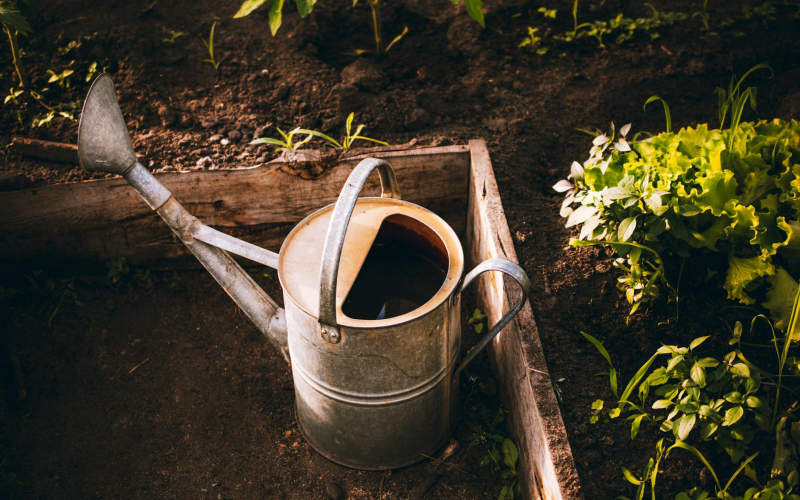

I killed a lot of tomato plants before I figured this out.
Not because I didn’t care. Because I cared too much—watering inconsistently, soaking the soil one day, forgetting for three days, then soaking it again. Classic cycle. And if you’ve grown anything in a traditional raised bed, you probably know exactly what I’m talking about. That boom-and-bust moisture thing wrecks vegetables.
A self-watering raised bed fixes that problem. It pulls water up from a reservoir below the soil through capillary action, so the roots stay consistently moist without you hovering over the hose every single morning. I built my first one in 2019 using cedar from a local lumber yard—total cost, around $65—and the tomato yields that summer were honestly embarrassing compared to everything I’d grown before. You can do this. Here’s how.
What You’ll Actually Need Before You Start
Let’s get the materials conversation out of the way first, because this is where people either overthink it or underbuy.
For a standard 4×2 foot bed (a perfect starter size, by the way), you’ll need two 8-foot lengths of 2×6 lumber, one 8-foot length of 2×4 for internal support, a sheet of 4×8 polyethylene plastic sheeting at 6 mil thickness minimum, roughly 12 feet of 1-inch PVC pipe, a 1-inch PVC elbow fitting, and a handful of 2.5-inch exterior screws. That’s basically it.
For wood, cedar is your best friend. Naturally rot-resistant, no chemical treatment needed. But it runs $2-3 more per board than pressure-treated pine. If budget is tight, go with untreated Douglas fir—you’ll get 5-7 solid years out of it before the base starts softening. Avoid pressure-treated lumber for food gardens, especially anything labeled ACQ (alkaline copper quaternary). The copper leaches into soil over time, and nobody wants that showing up in their carrots.
Total cost should land somewhere between $55 and $85 depending on where you live. I priced this out at three different Home Depots across two states in 2024 and averaged about $71.
Building the Outer Box First
Start with the simplest part: the outer frame.
Cut your 2×6 boards into two 48-inch pieces and two 24-inch pieces. Lay them out in a rectangle and screw the shorter ends inside the longer sides—this keeps the exterior dimensions clean. Two screws per corner. Predrill if your lumber is dry, because splits happen fast with cedar when you rush.
And don’t stress about perfectly flush corners. You’re building a garden bed, not a cabinet. A 1/8-inch gap somewhere isn’t going to matter.
Creating the Water Reservoir
This is the part that makes it “self-watering,” and it sounds more complicated than it actually is.
You need a false floor inside the box. Cut a piece of 2×4 into two lengths that run the width of your box—24 inches minus the thickness of your side boards, so roughly 21 inches. Position them lengthwise inside the box, one on each end, sitting flat on what will become the bottom. These create the gap where water will sit.
Then line the inside of the box—bottom and walls up to about 6 inches—with your plastic sheeting, stapling it along the top of the walls. This forms a waterproof basin below the soil. Poke a small overflow hole through the plastic and side wall about 6 inches from the bottom. That stops the reservoir from overfilling during heavy rain.
Reservoir depth should be 4 to 5 inches. Deep enough to hold a meaningful amount of water, not so deep that it waterloggs the roots above.
Installing the Fill Tube and Wicking Chamber
Cut your PVC pipe into one 18-inch length and attach the elbow so it angles slightly outward at the top—that’s your fill tube. Drill a 1-inch hole through the plastic liner and side wall near a corner, push the pipe through so the bottom sits in the reservoir. You’ll pour water into this tube rather than watering from above. Simple.
Now here’s the part most tutorials completely skip: the wicking chamber. You need a direct pathway for capillary action to actually work. Grab a small plastic container—an old yogurt tub is perfect—and drill about a dozen 1/4-inch holes across the bottom and sides. Fill it with a mix of perlite and potting soil, then press it up through the plastic liner from below into the soil zone above. This gives moisture a dedicated column to wick upward rather than just hoping it somehow migrates through the entire soil layer.
Without this step, capillary action is slow and unreliable. With it? Soil moisture stays remarkably stable, even in a July heat wave.
Filling With the Right Growing Mix
Don’t use garden soil. Just don’t.
Regular garden soil compacts, drains poorly in containers, and turns concrete-hard after a few wet-dry cycles. For self-watering systems specifically, you want something that stays loose and wicks well. My go-to ratio is 60% high-quality potting mix, 30% compost, and 10% perlite or coarse vermiculite.
A 4×2 bed at 12 inches deep needs roughly 6-7 cubic feet of mix. In 2023, a decent cubic-foot bag of potting mix ran about $8-10 at most garden centers. So budget $50-60 for growing medium alone—sometimes that ends up costing more than the lumber, which surprises a lot of people.
Positioning and Setting Up Your Bed
Where you put this matters more than most people realize. Six or more hours of direct sun daily is the minimum for most vegetables, but also think about how close you are to your water source, since you’ll be filling that PVC tube every few days.
Raised beds warm up faster in spring than in-ground plots—sometimes 3-4 weeks faster in colder climates like USDA Zone 5 or 6. In real terms, that means planting tomatoes in early May instead of late May. That’s a meaningful difference in yield, especially for longer-season varieties like Brandywine, which need 80-plus days to maturity.
Level the ground underneath before you set anything down. A tilted reservoir doesn’t fill evenly, and you’ll get dry spots on the high side.
Bottom Line
Here’s the thing nobody really talks about: the biggest advantage of a self-watering raised bed isn’t water savings or convenience. It’s that it removes you as the variable.
Human watering is chaotic. We go on vacation, we get slammed with work, we water once at 2pm in full sun instead of the morning. The self-watering setup creates consistency that no amount of careful human attention can match, because it’s passive and constant. Consistent moisture means consistent nutrient uptake—and that’s what actually drives yield and flavor, not fancy fertilizers or heirloom seeds. Build this bed, fill the reservoir twice a week, then mostly leave it alone. That restraint is honestly harder than the carpentry.
Frequently Asked Questions
How often do I need to refill the water reservoir?
In warm summer conditions, expect to refill every 2-4 days. During cooler weather, or for less thirsty crops like lettuce, you might stretch a full week between refills. Check by looking into the fill tube—if the water level has dropped below the false floor, it’s time.
Can I use pressure-treated lumber for a self-watering vegetable bed?
I’d skip it for anything you’re actually eating. Modern pressure-treated lumber uses copper-based preservatives that can leach into moist soil over time. Cedar, redwood, or untreated pine lined with heavy plastic are all better choices for food gardens.
What vegetables grow best in a self-watering raised bed?
Tomatoes, peppers, cucumbers, and herbs like basil thrive because they want steady moisture without wet feet. Crops with inconsistent water needs—some root vegetables, for instance—can be trickier. But lettuce and spinach do brilliantly here and bolt less frequently because soil temperature stays more regulated.
How long will this bed last?
With cedar and proper drainage, you’re realistically looking at 10-15 years. The plastic liner will probably need replacing around year 7-8. The wood will outlast the plastic if you chose quality cedar and let the exterior dry between rain events rather than piling mulch all the way up to the walls.
Photo by Artem Lysenko on Pexels

