

I ruined about six square feet of floor before I understood what I was doing. That’s the sentence no YouTube tutorial led with, and honestly? It should have.
My DIY hardwood floor refinishing experience started the way most home projects do: with misplaced confidence and a Home Depot receipt. The floors in my 1940s bungalow had seen better decades. Scratched, dull, wearing a finish somewhere between “vintage” and “neglect.” A professional quote came in at $3,400 for 680 square feet. I paid $620 total doing it myself. But the gap between those two numbers is where all the interesting stuff lives.
The Equipment Rental Decision That Almost Broke Me
Renting a drum sander feels like the obvious move. Cheap, available at most equipment rental places, done.
Here’s what nobody tells you: drum sanders are genuinely unforgiving machines. You set it down in one spot for two seconds too long, and you’ve got a shallow gouge running across your oak like a scar. I did exactly that in my dining room, about forty minutes in. The guy at Taylor Rental on Route 9 had warned me to keep it moving. I thought I understood. I did not understand.
Halfway through the project I switched to an orbital floor sander instead, and everything changed. Slower, yes. More forgiving, absolutely. If you’re renting equipment for the first time, I’d skip the drum sander entirely unless you’ve run one before or you’re willing to practice on a closet floor first. Which, for the record, I now tell everyone to do.
What the Prep Work Actually Looks Like
Most guides spend two paragraphs on prep and then jump straight to sanding. But prep took me almost a full day, and skipping any of it would have wrecked the finish.
Every nail head needs to be set below the wood surface. Not flush. Below. I had maybe 200 of them across the whole floor, and each one that sat even slightly proud would have torn through my sandpaper within seconds. I used a nail set and a hammer, crouching on my hands and knees, working row by row. My lower back had opinions about this process. Strong ones.
The baseboards got taped off with Frog Tape. I also pulled out the floor registers, labeled which room each one went back to (learned that the hard way on a different project), and removed every stick of furniture plus the door thresholds. Genuinely unglamorous work. But this is the part that separates floors that look professional from floors that look like someone tried.
Grit Sequence: The Part I Got Wrong First
Start at 36-grit if you’ve got a heavy finish or significant damage. Work up through 60, then 80, then finish at 100 or 120.
I started at 60 because I thought 36 sounded aggressive. It did not fully remove the old poly in the corners, which meant the stain grabbed unevenly in those spots. I had to go back. And going back after you’ve already moved on is the most demoralizing part of any DIY project, not just floor work.
The corner and edge sander (also a rental) runs at 60-grit to match your main floor passes, then follows up in sequence. Don’t skip grits trying to save time. I tried saving maybe 45 minutes on grit 80. It cost me four hours of remediation.
Choosing a Stain Color Is Harder Than It Sounds
I spent three days on this. Not exaggerating.
I tested seven stain samples directly on my floor — a mix of Minwax and Duraseal colors, patches about 4×4 inches each. Colors look completely different on raw wood versus the sample chip at the store. What looked like a warm honey tone on the chip read almost orange on my floor. Early American ended up being the one I landed on, and I almost went with Special Walnut, which would have been a mistake for the warm light my living room gets in the afternoon.
Natural (no stain, just finish) is also a legitimate choice. I’d consider it more seriously now. The grain on 80-year-old oak is something worth letting breathe.
Applying the Finish Without Losing Your Mind
I used Bona Traffic HD, which runs about $90 per gallon and is genuinely worth the price over the cheaper water-based options. Two coats with a light 220-grit screen between them.
The applicator matters almost as much as the finish. A T-bar applicator gives you better control than a roller in tight spaces, and you want to work your way toward a door so you’re never painting yourself into a corner. Literally. I did this correctly on the second floor and incorrectly on the kitchen, and the difference in how the finish laid out was visible.
Humidity is a real factor. I did this in late May, which was smart. A rainy week in October would have extended my dry times significantly and potentially caused bubbling. If you’re planning this project, check a two-week forecast before you start.
The Part Nobody Talks About: Living Without Your Floors
You need to stay off the floor for 24 hours after each coat. With two coats plus a screening, that’s three full days of navigating your own house like it’s a crime scene.
My family camped in the two rooms I’d cordoned off as “done.” We ate off a folding table for five days. The dog was baffled and slightly resentful. If you have kids or pets, plan for this seriously — not as an afterthought.
The full cure takes 30 days, during which you shouldn’t drag furniture, put down rugs, or let anyone wear outdoor shoes on the floor. This is the instruction that feels excessive until you see what happens when someone ignores it at day 12.
What I’d Do Differently
Hire out the drum sanding. I know. But that one piece of equipment — in the wrong hands, at the wrong speed. can cause damage that takes hours to repair. Everything else I’d do myself again, gladly.
The honest truth about DIY hardwood floor refinishing is that it rewards patience far more than skill. The technique is learnable in an afternoon. But the patience to go back to 36-grit when you need to, to tape every inch of baseboard, to wait the full 30 days before moving your furniture back, that’s the part that actually determines whether your floors look like $3,400 of professional work or like something you did yourself on a long weekend. Mine look pretty great. My dining room scar, sanded back and refinished, is almost invisible now.
Almost.
FAQ
How long does DIY hardwood floor refinishing take from start to finish?
For an average room. say, 300 to 400 square feet, budget a full weekend for sanding and prep, then two to three additional days for finish coats and drying time. The 30-day full cure adds a tail to the project most people don’t plan for.
Can I refinish floors without sanding all the way down?
Sometimes. If your finish is intact but just dull, a screen-and-recoat (light abrasion plus new topcoat) can work beautifully. But if there are deep scratches, stains, or old wax buildup, you’ll need to sand down to bare wood.
Is water-based or oil-based finish better for DIY use?
Water-based finishes like Bona Traffic HD dry faster, have lower odor, and are genuinely easier to apply evenly. Oil-based gives a slightly warmer amber tone but takes much longer to cure and the fumes require serious ventilation. For most DIYers, water-based is the smarter choice.
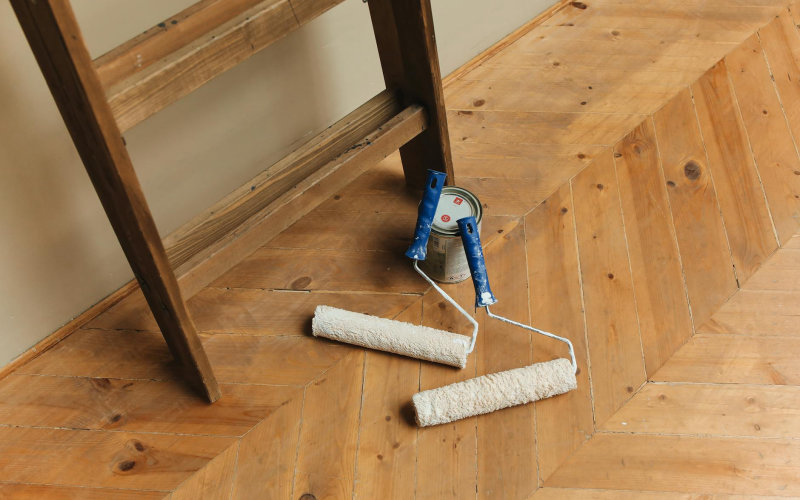
Photo by Polina Tankilevitch on Pexels

