
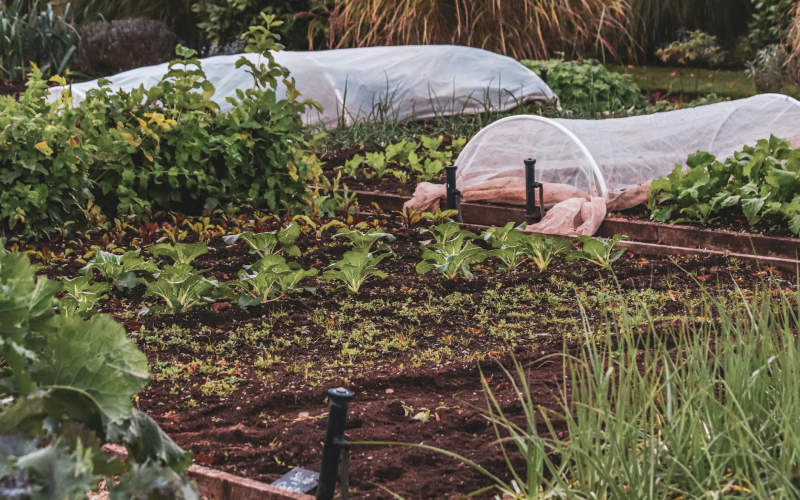

I killed a lot of tomatoes before I figured this out. Years of mediocre harvests, strange pest infestations, and genuinely wondering why my neighbor’s garden looked like a vegetable catalog while mine resembled a crime scene. The answer wasn’t better soil or more fertilizer. It was what I was planting next to things.
Companion planting isn’t folk wisdom dressed up as science. There’s real, documented evidence behind it — plants genuinely communicate through root chemicals, volatile compounds, and shared mycorrhizal networks. A 2021 review in the journal Agronomy found that strategic intercropping can increase total garden yield by 20-50% compared to mono-cropping the same space. That’s not a rounding error. That’s half again as many vegetables from the same patch of dirt.
So here are seven combinations I’ve actually tested — plus what the research says — ranked by how dramatically they’ll change your results.
1. Tomatoes + Basil (The Classic for a Reason)
Every gardener has heard this one. Most dismiss it as an old wives’ tale. They’re wrong.
Basil releases volatile compounds — specifically linalool and pinene — that genuinely confuse aphids and thrips. A University of Florida study tracked tomato plants grown alongside basil versus those grown alone and found a measurable drop in whitefly populations on the companion-planted beds. Plant basil about 12-18 inches from your tomato stems, not tucked underneath where it’ll get shaded out. Two or three basil plants per tomato is the sweet spot.
And yes, they taste better together when you cook them. But that part’s optional.
2. The Three Sisters: Corn + Beans + Squash
This one goes back roughly 1,000 years. Indigenous farmers across North America — particularly among the Haudenosaunee (Iroquois) Confederacy — used this combination to sustainably grow food without exhausting their soil. That’s not coincidence. It works because each plant does something the others actually need.
Corn grows tall and gives beans something to climb. Beans fix atmospheric nitrogen straight into the soil, feeding the heavy-feeding corn and squash. Squash sprawls wide along the ground, its big prickly leaves choking out weeds and locking in moisture. Plant the corn first, let it hit about 6 inches tall, then tuck beans and squash around it. Spacing matters here — give squash at least 18 inches to sprawl or you’ll regret it.
In my own garden, the Three Sisters bed reliably outperforms everything else by total food weight per square foot. It’s almost unfair.
3. Carrots + Onions
Here’s a pairing that solves two problems at once. Carrot fly is the bane of carrot growers — the larvae tunnel through roots and devastate entire rows. Onion fly does the same to bulbs. But carrot flies are repelled by the sulfur compounds onions emit. And onion flies dislike the scent of carrots.
Plant them in alternating rows, about 4 inches apart. You’re essentially disorienting each pest by surrounding its target with something it hates. It won’t eliminate every problem — nothing does — but it cuts pest pressure dramatically. And if you prefer leeks to onions, they work just as well.
4. Lettuce + Tall Tomatoes or Peppers
This is less about pest control and more about raw physics. Lettuce bolts in heat. It turns bitter, goes to seed, becomes useless. But tuck lettuce into the partial shade your tomato or pepper plants cast and you’ll extend the harvest by three to four weeks in summer. Sometimes longer.
I planted butterhead lettuce under my tomatoes in July 2022 — fully expecting failure — and harvested through mid-August in a summer that hit 95°F multiple days running. The tomatoes did the work. The lettuce just needed cover. You’re also pulling double-duty from every square foot of bed space, which matters when you’re working with limited room.
5. Roses + Garlic (Works in Veggie Beds Too)
Garlic is one of the most useful companion plants you can grow, full stop. It repels Japanese beetles, aphids, and several borer species through the allicin it releases into surrounding soil. Most people know to plant it near roses, but it works equally well near peppers, eggplant, and tomatoes.
Plant cloves about 4 inches from whatever you’re protecting, in fall for spring gardens. But don’t plant garlic near beans or peas — it actively inhibits their growth. That’s not a theory; it’s a documented allelopathic effect. For nightshades and brassicas, though? It’s one of your best defenses against boring insects and deer who find the smell intolerable.
6. Cucumbers + Nasturtiums
Nasturtiums are what gardeners call a “trap crop.” Aphids adore them — absolutely lose their minds over them — which means plant nasturtiums near your cucumbers and the aphids will preferentially swarm the nasturtiums and ignore your cucumbers. You’re offering a sacrifice.
But here’s the smarter play: don’t yank the nasturtiums when they get covered in aphids. Let ladybugs and parasitic wasps find that colony and set up shop in your garden. Those same predators will then patrol your cucumbers. It’s a three-step biological control system that costs nothing but a seed packet (usually under $3). And nasturtium flowers are edible — so even if everything goes sideways, you get salad garnish.
7. Brassicas + Dill or Celery
Cabbage worms. Cabbage loopers. Imported cabbageworm butterflies drifting around your broccoli, depositing eggs like tiny disasters. Every brassica grower knows this particular misery.
Dill and celery both attract parasitic wasps — specifically Braconid wasps, which lay eggs inside caterpillars and destroy them from the inside out. Brutal? Yes. Effective? Extremely. Plant dill generously around your cabbage, broccoli, Brussels sprouts, and kale. Let it flower; that’s when it pulls in the most beneficial insects. Celery planted along the border of brassica beds also appears to repel the white cabbage moth, though the mechanism there is less thoroughly documented.
Combined with a single row of nasturtiums along the outer edge, this setup creates a remarkably solid pest-deterrent perimeter.
Bottom Line
Here’s something most companion planting guides skip entirely: timing matters as much as the combination. Planting basil the same day as your tomatoes doesn’t give it time to build the volatile compound output that actually repels insects. You want your companion plants established ahead of your main crop — 7-10 days minimum. Let them settle, start putting compounds into the air and soil, then bring in the plant you’re protecting. Think of it like setting up a neighborhood watch before trouble arrives, not after.
That single adjustment — which I stumbled onto through three seasons of trial and error — made a bigger difference than any specific pairing I’d ever tried. Get the timing right and these combinations will genuinely transform what comes out of your garden.
Frequently Asked Questions
Does companion planting actually work, or is it mostly anecdotal?
Honestly? Both. Some combinations are well-supported by peer-reviewed research (basil/tomato, Three Sisters, carrot/onion). Others rest on generations of observational gardening that hasn’t been formally studied yet. I wouldn’t dismiss either category — farmers testing the same thing across centuries is its own form of data.
Can I combine multiple companion plants in the same bed?
Absolutely, and you should. A tomato bed with basil, nasturtiums, and a garlic border is doing three different jobs simultaneously — pest confusion, trap cropping, and soil chemistry. Just watch for plants that inhibit each other (garlic near beans being the classic example).
How far apart should companion plants be from the main crop?
Generally 12-18 inches for tall companions, 6-12 inches for low-growing herbs and flowers. Close enough to share chemical signals and attract the same insects, far enough that they’re not wrestling for the same root space.
Do these combinations work in raised beds or containers?
Yes — raised beds especially. You’ve got better control over layout, drainage, and spacing. Containers work too, though you’re limited by volume. One companion plant per large pot alongside your main crop is realistic, and usually enough.
Photo by Boys in Bristol Photography on Pexels

