
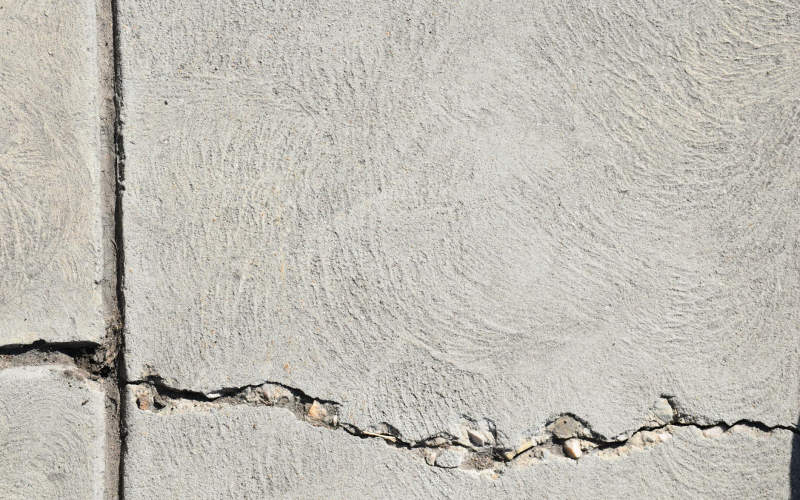

I ignored a crack in my driveway for exactly one winter. Just one. By March, what had been a quarter-inch hairline fracture near my garage apron had split open wide enough to swallow a garden trowel. The repair ended up costing three times what it would’ve if I’d just handled it back in October when the weather was still on my side.
Concrete is deceptive. It looks permanent, like it’s quietly managing everything just fine. But here’s what’s actually happening: water seeps into those cracks, freezes at 32°F, expands roughly 9% in volume, and shoulders the crack wider with every single freeze-thaw cycle. In Minnesota, Ohio, or anywhere winters actually bite, you’re looking at 30 to 50 of those cycles between November and February. That’s 30 to 50 tiny explosions inside your concrete. Every. Single. Season.
If you’re reading this in September or October, you’re sitting in the sweet spot. Mid-November? Close, but probably workable. December? Stop reading and go buy materials right now. This guide walks you through the whole process yourself—no contractor needed.
First, Figure Out What Kind of Crack You’re Actually Dealing With
Not all cracks are the same. Treating them like they are is where most DIYers go sideways.
Hairline cracks run under 1/8 inch wide. They’re surface-level, usually from shrinkage during the original pour, and they’re the simplest to fix. Structural cracks are wider than 1/4 inch—often with one side sitting higher than the other (called heaving)—and they can point to drainage or soil trouble underneath. Then there are control joint cracks, which are intentional cuts in the concrete that sometimes get overfilled or damaged over time.
Significant heaving, where one section sits noticeably above the adjacent one, is a different animal entirely. That might call for mudjacking or foam lifting. But for the 90% of homeowners dealing with typical surface or moderate cracking, what I’m about to walk you through absolutely gets the job done.
Gather Your Supplies Before You Touch a Thing
Here’s what you actually need. For hairline to 1/2 inch cracks: a concrete crack filler like Quikrete’s Polyurethane Concrete Crack Sealant (around $9 a tube at Home Depot, 2024 pricing), a wire brush, a shop vac or leaf blower, and a caulk gun. For wider cracks or spalled sections: hydraulic cement or a vinyl concrete patcher like Sakrete’s Top ‘N Bond, a margin trowel, bonding adhesive, and a cold chisel with a hammer.
Buy slightly more than you think you’ll need. Running out mid-repair with an open crack sitting there is genuinely maddening, and most of this stuff keeps well on a shelf anyway.
Clean the Crack Like You Actually Mean It
This step gets skipped constantly. Don’t skip it.
Use a wire brush or angle grinder fitted with a wire wheel to scrub out every scrap of loose debris, old filler, dirt, and plant matter from the crack. Grass and weed roots are surprisingly good at hiding in there. After brushing, blast it with compressed air or a leaf blower, then follow up with a shop vac. You want bare, clean concrete on both sides.
If there’s oil staining near the crack (common around garage aprons), scrub it down with a degreaser first. Filler adhesion to oily concrete is essentially zero—the whole repair peels out inside a season if you skip this part.
The Actual Repair Process, Step by Step
For hairline cracks under 1/4 inch: Load your polyurethane sealant into the caulk gun, run a steady bead into the crack slightly overfilling it, then smooth it with a putty knife or a gloved finger. It skins over in roughly an hour and fully cures in 24. That’s it.
For cracks between 1/4 and 1/2 inch: Same approach, but press foam backer rod in first. It’s a foam rope sold by the foot at any hardware store, and it gives the sealant something to bond against so it doesn’t just sink into the void.
For wider cracks or crumbling sections: This is where the vinyl concrete patcher earns its keep. Mix it per the bag instructions—Sakrete’s Top ‘N Bond goes to a peanut butter consistency—but before you pack anything in, brush bonding adhesive onto the clean, dry crack surfaces. That step isn’t optional. Without it, your patch has nothing to grip. Pack the compound in firmly, tamp it down, and feather the edges with your margin trowel. Cover everything with plastic sheeting for 24 hours to slow the cure and keep it from cracking while it sets.
Let It Cure Before the Temperature Drops
Here’s the part most guides breeze past. Concrete patching products need temperatures above 50°F to cure correctly. It says so right on the label—but people ignore it anyway. If temps dip below 50°F within 24 hours of your repair, the curing chemistry breaks down and you’ll be left with a weak, crumbly patch that won’t survive spring.
Check your 10-day forecast before you start anything. Pick a stretch where nights stay above 50°F. In most of the northern US, that realistically means finishing this by mid-October at the absolute latest.
Seal the Entire Driveway When You’re Done
Once your patches have cured for at least 28 days (or you knocked this out in late summer with time to spare), put a penetrating concrete sealer over the whole driveway. Not a film sealer—you want a penetrating silane or siloxane product that soaks in and fights water from inside the slab.
I’ve had solid results with Ghostshield Lithi-Tek 4500, which runs about $60 for a gallon covering 200 to 400 square feet depending on porosity. Apply it with a pump sprayer or roller on a dry day. Honestly, this is the single most effective thing you can do to prevent future cracking, because it cuts off water infiltration at the source. One application holds up for 5 to 10 years.
Bottom Line
Here’s something I haven’t seen written plainly anywhere: the timing of your repair matters more than the product you pick. People spend hours comparing fillers and then slap the winner on at 45°F in November and wonder why it failed by spring. A mid-grade filler applied correctly in September will outlast a premium product rushed in after the first frost—by years. The chemistry only cooperates within a narrow temperature and moisture window. If you take nothing else from this guide, take that: schedule the repair first, then go buy materials. Not the other way around.
Frequently Asked Questions
Can I repair concrete cracks in cold weather if I use fast-set products?
Technically yes, but you’re rolling the dice. Products like Quikrete Fast-Setting Concrete do work faster, but they still want ambient temps above 40°F and can’t take a hard freeze within 24 hours. If it’s mid-November and you’re banking on a three-day warm stretch, you might get away with it—but you’re gambling, full stop.
How wide does a crack need to be before I should call a professional?
Anything wider than 1/2 inch, or any crack with vertical displacement (heaving), should at least get a professional set of eyes on it. Doesn’t automatically mean expensive work ahead, but it could point to drainage problems or soil failure that no surface repair is going to fix.
What’s the difference between concrete caulk and concrete patch?
Caulk—like the polyurethane sealant—stays flexible and handles movement well. It’s the right call for cracks that’ll keep shifting slightly with temperature swings. Patch compound like vinyl concrete patcher is rigid, bonds more permanently, but can crack again if there’s ongoing movement underneath. Match the product to what the crack is actually doing.
How long will a DIY concrete crack repair actually last?
Done right—with real surface prep, correct temperature conditions, and a sealer applied afterward—a quality repair should hold 5 to 8 years on a residential driveway. I’ve had patches outlast that. The ones that fail early almost always trace back to skipped prep or wrong-temperature application. It’s almost never the product’s fault.
Photo by Joshua Mueller on Pexels

