
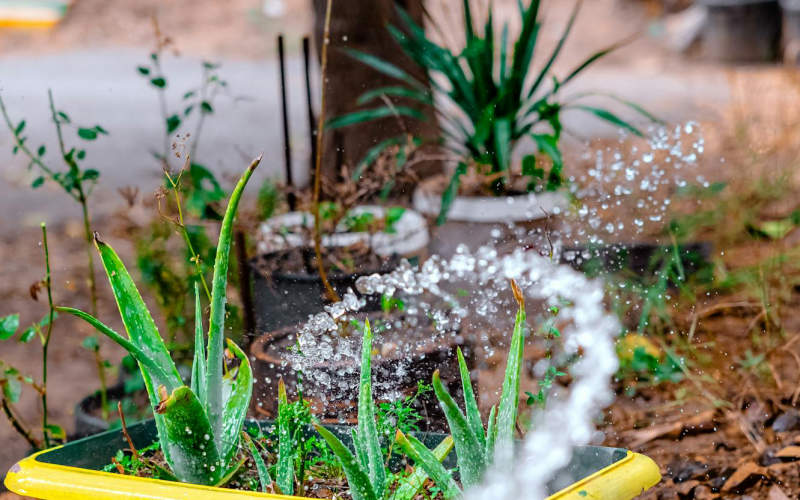

I killed a perfectly healthy rosemary bush three summers ago. Didn’t realize it at the time. Every single morning I was out there hosing it down, feeling genuinely responsible, like I was doing the thing right. Six weeks later it was yellow, mushy at the base, and very dead. The nursery guy took one look at my sad little stick and said, “You loved it to death, man.”
That’s the brutal irony of overwatering. It doesn’t look like drowning. It looks like neglect. Yellow leaves, droopy stems, brown edges — every symptom mimics what you’d expect from a plant that’s too dry, which is exactly why most gardeners respond by adding more water and accidentally finishing the job.
So if your garden looks rough and you can’t figure out why, stick with me. The fix is genuinely straightforward once you understand what’s happening below the surface.
What Overwatering Actually Does to Your Plants
Here’s what most people never get told: plants don’t just drink water. They breathe through their roots. Roots pull oxygen from tiny air pockets in the soil, and when you keep the ground constantly saturated, those pockets collapse. The roots suffocate.
And suffocated roots can’t absorb nutrients. Can’t move water up to the leaves. So your plant is sitting in a literal puddle and still dying of thirst. It’s a botanical tragedy, honestly.
Then comes the mold. Wet, oxygen-starved soil is ideal territory for root rot fungi like Phytophthora and Pythium. A 2021 review in the journal Plant Disease found that Phytophthora root rot alone causes hundreds of millions of dollars in annual crop losses. Once that stuff takes hold in your tomatoes, you’re pretty much done.
The Actual Signs You’re Overwatering (Not Underwatering)
Most gardeners confuse the two. Here’s how to tell them apart.
Stick your finger two inches into the soil. Still wet from two days ago? That’s your answer. No app, no gadget — just your hand.
Yellowing leaves that feel soft and mushy (not crispy) almost always mean too much water. Crispy brown tips that curl? That leans toward drought stress. Wilting in the morning — when it’s cool and the plant should be standing upright — is a serious red flag. And if your soil smells sour or swampy, that’s anaerobic bacteria at work. Get the watering under control immediately.
A few other things worth watching for:
Algae or moss creeping across the soil surface. Fungus gnats hovering around your pots (those tiny, maddening flies). Stems that look dark and waterlogged near the soil line. Leaves dropping off while still perfectly green.
Spot two of those together and the picture’s pretty clear.
Why “Water Every Day” Is Terrible Advice
Someone told you to water every morning. I know they did — it sounds diligent and caring. But it’s one of those pieces of inherited garden wisdom that’s just wrong for most situations.
A succulent and a hydrangea don’t have the same needs. A vegetable bed in sandy Florida soil and one in heavy Oregon clay are operating in completely different realities. A fixed daily schedule ignores all of that.
The University of California Cooperative Extension published guidelines in 2019 specifically calling out fixed-schedule irrigation as one of the top causes of residential plant loss. Their recommendation was to water based on soil condition, not the calendar. And look, I know “it depends” is an annoying answer when you’re trying to keep something alive. So here’s something concrete instead.
The Simple Schedule That Actually Works
I’ve been using this approach for about four years across a mixed garden — vegetables, perennials, a handful of ornamental shrubs. It’s not complicated at all.
Before you touch the hose, check the soil. Two-inch finger test. Moist? Walk away. Dry at two inches but damp deeper down? Light drink. Dry past three or four inches? Water slowly and deeply.
For most vegetables — tomatoes, peppers, beans, squash — deep watering every three to four days during growing season beats daily shallow watering every single time. Deep watering pushes roots downward, which makes plants more drought-tolerant and structurally tougher over time.
Established perennials and shrubs? Once a week is often plenty after their first year. Native plants in an adapted climate might barely need supplemental water at all.
Container plants are the exception to all of this. They dry out faster, so check them daily — but only water when the top inch is actually dry.
Set a reminder to do the finger test every two days if you’re forgetful. That’s genuinely the whole schedule.
Fixing Plants That Are Already Overwatered
Not dead yet? Good. Here’s what to do.
Stop watering. Immediately. Sounds obvious — do it anyway.
If it’s a container plant, pull it out of the pot and let the root ball sit on newspaper for a few hours. Healthy roots are white or light tan and firm. Rotten roots are brown or black, soft, and they’ll probably smell. Cut off everything rotten with clean scissors and repot into fresh, dry mix.
For in-ground plants, improve drainage around the root zone. Aerate compacted soil with a fork. Work in compost or perlite if your soil holds water like a sponge. And if you’re gardening in a low spot where water pools after rain, seriously consider raised beds. I moved two of my vegetable beds to raised planters in 2022 and the improvement in plant health was immediate and obvious.
Give it two weeks before you judge the recovery. It won’t happen overnight.
The Watering Tools Worth Using
You don’t need much. But a couple things genuinely help.
A basic soil moisture meter — I bought one for $12 on Amazon three years ago and it’s still going — removes all the guesswork. Stick it in, read the number, move on. Especially useful if you’re managing a bigger garden and the finger test gets tedious across fifteen beds.
Drip irrigation is worth real consideration if you have vegetable beds. It delivers water directly to the root zone, cuts down on surface evaporation, and tends to apply less water than sprinklers — which is usually exactly what you want. A basic drip kit for a 4×8 raised bed runs $25 to $40 and takes an afternoon to set up.
Soaker hoses work similarly and cost even less. Not glamorous. Work great.
Bottom Line
Here’s my honest take after twelve years of gardening and killing a fair number of things along the way: most plant death comes from concern, not carelessness. People water because they care. And the plants die anyway. There’s something genuinely unfair about that.
But what I really want you to take away from this is simpler than any schedule I could give you. Your soil is communicating with you constantly. Every time you override what the soil is telling you — in favor of a routine someone handed you years ago — you’re ignoring the one signal that actually matters. What I described above isn’t really a watering schedule. It’s a listening schedule. You’re not deciding when to water. The soil is. You’re just paying attention to it.
That’s the whole thing. It sounds simple because it is.
Frequently Asked Questions
How do I know if my plant is overwatered or underwatered?
Press your finger two inches into the soil. Wet soil paired with soft, yellowing leaves usually means overwatering. Dry, crumbly soil with crispy brown leaf tips points toward underwatering. And wilting in the cool morning hours is a stronger sign of overwatering than wilting in afternoon heat — that one trips a lot of people up.
Can a plant recover from overwatering?
Yes — if you catch it early enough. Stop watering, let the soil dry out, and remove any rotted roots on container plants. Most plants bounce back within two to three weeks if root rot hasn’t spread too far. The earlier you catch it, the better your odds.
How often should I water my vegetable garden?
For most vegetables in average soil, deep watering every three to four days beats daily shallow watering. But the exact frequency depends on your soil type, your climate, and what you’re growing. Always check soil moisture before you water rather than sticking to a fixed-day routine.
What’s the best time of day to water plants?
Early morning — before 10 a.m. if you can manage it. The water soaks in before heat drives evaporation, and leaves dry off before evening, which cuts fungal risk significantly. Avoid watering at night. Wet foliage sitting in cool overnight air is basically an open invitation for mold and disease.
Photo by Yusuf sinan on Pexels

