
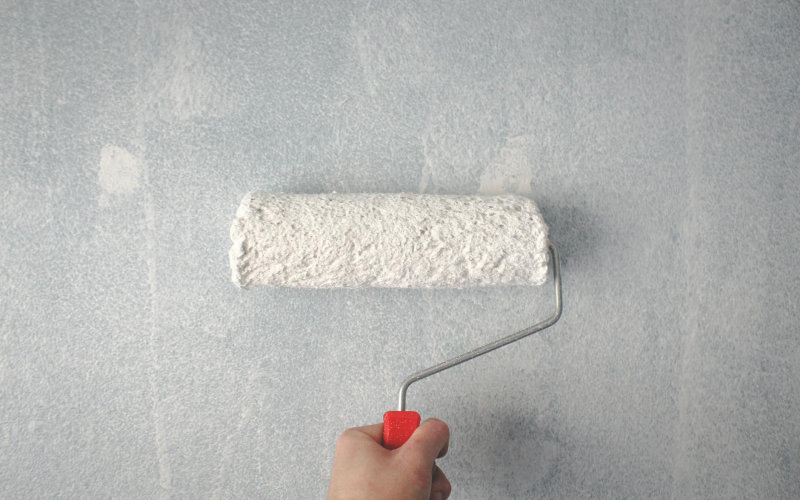

I repainted my home office three times in one year. Same room. Same furniture. Completely different feelings each time — and the only thing I touched was the paint color. Not even the color, really. The undertone.
That’s the thing nobody mentions when you’re standing in the paint aisle squinting at 47 shades of “white.” The actual hue matters less than what’s lurking underneath it. A pale gray with a purple undertone will turn a small bedroom into something that feels like a cave by 4 PM. That same room, painted with a pale gray pulling green? Suddenly it breathes. I’ve watched this happen in my own home, in friends’ apartments, and it never quite stops feeling like a magic trick.
So if your room feels smaller or dimmer than it deserves to, there’s a real chance the paint undertone is working against you — not the square footage.
Why Undertones Matter More Than the Color Itself
Quick science lesson. Every paint color carries secondary pigments that only show themselves under certain lighting conditions. Your “soft white” might be secretly warm (yellow, pink, peach) or cool (blue, green, violet). And those hidden tones interact with your light sources, your flooring, your furniture — in ways that either open a space up visually or quietly squeeze it shut.
Benjamin Moore’s color research team has been talking about this for years. Their 2018 Color Trends report specifically noted that homeowners kept misidentifying undertones as the source of their frustration with a repaint — they assumed they’d chosen the wrong color, when really they’d picked the wrong undertone for their particular light conditions.
Cool undertones generally recede. Warm undertones generally advance. That’s the whole game, right there in two sentences.
The Worst Offenders: Undertones That Shrink Small Rooms
Pink undertones. I mean it. They’re hiding in countless “neutral” paints and they’re ruthless in a tight space.
Benjamin Moore’s Simply White (OC-17) is a genuinely lovely color — but it pulls warm and faintly creamy. In a south-facing room drowning in natural light, gorgeous. In a north-facing 9×10 bedroom? It can read almost peachy, and suddenly the walls feel like they’re leaning toward you.
Purple undertones in gray are another trap worth knowing about. Sherwin-Williams Agreeable Gray (SW 7029) is one of the most popular paint colors sold in America, and it genuinely works in large, well-lit spaces. But it carries a distinct violet undertone that can make small rooms feel moody and enclosed rather than airy. I’ve personally watched it flatten a narrow hallway in about 15 minutes of late-afternoon light. Not ideal.
Cool Blue-Green Undertones: Your Best Friend in a Tight Space
If I could hand you exactly one piece of advice about paint undertones for small rooms, it’d be this: lean toward colors with a subtle blue or blue-green undertone.
These tones mimic open sky and water. Your brain registers them — almost involuntarily — as signals of distance and openness. It’s the same perceptual trick that makes a painting with a pale blue horizon feel like it has actual depth.
Farrow & Ball’s Borrowed Light (No. 235) is the textbook example. It’s a very pale blue with an almost imperceptible green lean, and it makes small rooms feel washed out in the absolute best way. Several interior designers I’ve spoken with over the years call it their “cheat code” for awkward box rooms. Yes, it runs around $115/gallon — but if you’re only painting one room, the transformation justifies every cent.
On the more accessible end, Sherwin-Williams Aerial (SW 6517) does something similar. A soft blue-gray that just expands visually under both natural and artificial light.
How to Test an Undertone Before You Commit
Don’t trust the paint chip. I’ll say it again: do not trust the paint chip.
The chip shows you the color under fluorescent store lighting, on a white background, at a size roughly equivalent to a credit card. None of those conditions exist in your actual home. None of them.
Here’s what actually works. Buy the sample pot (usually $4–6), then paint a 12×12 inch square directly on your wall — not on poster board, directly on the wall — and observe it at three specific moments: 9 AM, 2 PM, and after your lights come on at night. Take photos without flash. The undertone will behave differently in each condition, and you’ll know exactly what you’re dealing with before you buy a full gallon.
And try this: hold a pure white piece of paper next to your painted square. You’ll immediately see whether the color pulls warm or cool. Works every single time.
Ceiling Strategy: The Undertone Most People Ignore
Your ceiling accounts for roughly 20–30% of your visual field in a normal room. Most people slap on builder’s flat white and never think about it again. That’s a missed opportunity.
If your walls carry a cool blue-green undertone, painting the ceiling in the same color family — just 2–3 shades lighter — makes the room feel taller. This isn’t theory. It’s a technique Scandinavian designers have been using for decades in the characteristically small apartment spaces of cities like Stockholm and Copenhagen.
But here’s the trap. Put a warm white on your ceiling while your walls run cool, and your brain registers that contrast as a visual “drop.” The warm tone advances, the cool walls recede, and the room ends up looking like it has a lid clamped on top.
Trim Color: The Undertone Amplifier
Your trim is doing a lot more work than you’re probably giving it credit for.
Bright white trim with a cool undertone — something like Benjamin Moore’s Chantilly Lace — amplifies the airy quality of cool-undertone walls. It creates a crisp visual boundary that makes the space read as intentional and open. Clean. Done.
But put a warm ivory trim — anything carrying yellow or peach — against those same cool-undertone walls, and you get a jarring contrast that fragments the space visually. It reads as chaotic, somehow smaller. Definitely not what you’re after.
So match your undertone families between walls and trim. Cool walls, cool trim. Warm walls, warm trim. Simple rule. Massive payoff.
Bottom Line
Here’s something I haven’t seen spelled out anywhere else: the real reason undertones affect perceived room size isn’t purely about the advancing-and-receding science. It’s about cognitive load. When a room’s undertones are fighting each other — warm walls, cool trim, warm ceiling — your brain works slightly harder to process the space. That low-grade visual tension registers as “something feels off” and, interestingly, as “this room feels small.” When undertones are harmonious, your brain processes the space without friction, and that effortlessness literally reads as more room. You’re not just tricking your eyes. You’re reducing the resistance in how your nervous system experiences the space.
Frequently Asked Questions
Does paint finish affect how undertones appear?
Yes, significantly. Matte finishes absorb light and can deepen or muddy undertones. Eggshell and satin reflect a bit more, which tends to make cool undertones look cleaner and more pronounced. For small rooms, eggshell is usually your best call.
What’s the best undertone for a room with no natural light?
Go with a soft yellow-based warm white rather than anything cool. Without daylight to activate cool undertones, they can drift toward purple or gray. Something like Benjamin Moore White Dove (OC-17) adds warmth without tipping into yellow.
Can dark paint colors with the right undertone still make a room feel bigger?
Actually, yes — deep blues and green-blacks with cool undertones can create a sense of depth that makes a room feel like it extends beyond the walls. It’s a different effect than “bright and airy,” but it genuinely works. Think Farrow & Ball Hague Blue as your reference point.
How do I identify an undertone if the paint brand doesn’t tell me?
Paint a sample on your wall, then photograph it next to a neutral gray card (printer paper works fine). In the photo, the undertone will be far more obvious than it is in person. Or just hold a pure white piece of paper next to the dried sample — the comparison instantly reveals warm versus cool.
Photo by Malte Luk on Pexels

