
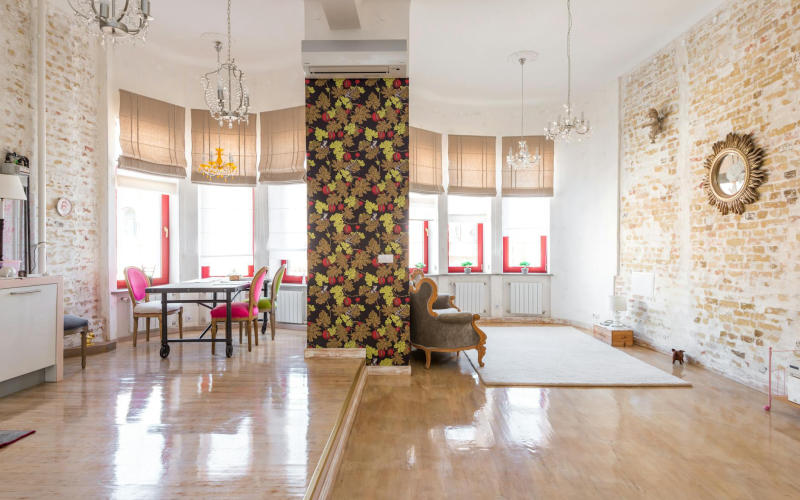

I used to think a perfectly decorated room meant every single piece matched. Same wood tone, same leg style, same era. My first apartment looked like I’d bought everything from one IKEA showroom floor—technically coordinated, completely soulless.
Then a friend walked in and said, “It looks like a catalog. Not a home.” She wasn’t wrong.
Mixing furniture styles is genuinely one of the most misunderstood things in home decorating. People either avoid it entirely (everything matchy-matchy) or go completely overboard and end up with something that reads more like a storage unit than a living room. But there’s a real middle ground, and once you get the mechanics of it, you’ll stop second-guessing every furniture purchase you make.
Start With a Dominant Style (The 60% Rule)
Here’s what nobody tells beginners: you don’t have to pick one style and stick to it rigidly, but you do need one style to anchor everything else.
Think of it like a playlist. You can throw in a country song and a hip-hop track, but if 60% of it is indie folk, the whole thing still hangs together.
Same idea applies to your room. Choose a dominant style for roughly 60% of your furniture—let’s say mid-century modern. Bring in 30% from a secondary style (industrial, maybe, or Scandinavian). The last 10% is where you get to be genuinely weird. A Victorian side table. A brutalist bookend. Something that makes people ask where you found it. That friction is completely intentional, and it’s actually what creates interest.
Understand What Makes Styles “Relate” to Each Other
Not all furniture styles play nicely together. This is where a lot of people get lost.
The secret is finding shared DNA between pieces. A 1950s Danish teak sideboard and a modern Japanese-inspired shelf both prize clean lines and natural materials—they’ll coexist beautifully even though they’re from different continents and decades. But try pairing that same sideboard with a heavily ornate French provincial dresser and you’ll feel the tension immediately. It’s not that it can never work, but you’d need a very specific bridge element to pull it off.
Look for shared characteristics: similar leg proportions, matching undertones in wood finishes, a common color running through the upholstery, comparable visual weight. If two pieces share even two of those traits, they can usually occupy the same room without fighting each other.
So before you buy anything, ask yourself: what does this piece actually have in common with what’s already there?
Use Color as the Unifying Thread
Color is the cheat code most designers reach for when mixing eras and styles. And it works so reliably that I almost feel guilty calling it a “tip”—it’s more like a fundamental law.
Pick two or three colors and pull them through every major furniture piece in the room. Doesn’t matter if the sofa is 1970s conversation-pit style and the armchair came straight off a 2024 showroom floor—if they’re both sitting in the same dusty terracotta family, they’ll read as deliberate choices.
Designer Justina Blakeney—founder of Jungalow and someone who built an entire brand around deliberately eclectic interiors—leans heavily on this. Her rooms mix eras freely, but a recurring palette (usually warm ochres, deep greens, and off-whites) makes everything feel like it belongs. Neutrals help too. If your larger pieces stay neutral, you can afford to get bolder and stranger with accent pieces without losing that sense of order.
Pay Attention to Scale and Visual Weight
This is the one beginners consistently skip, and it causes more problems than almost anything else.
A petite spindle-leg accent chair next to a massive tufted leather sectional will look awkward. Not because the styles clash—because the visual weights are completely mismatched. Your eye reads the scale difference before it even gets to the style difference.
Keep your pieces in roughly similar visual weight categories. A heavy, dark oak farmhouse dining table can actually work with sleek metal industrial chairs because both carry visual density—the table through sheer mass, the chairs through the repetition of metal frames. But pair that same table with delicate ghost chairs (the clear acrylic Kartell ones that sell for around $600 each) and the table will swallow them whole.
Mix Metals and Wood Tones Intentionally
Yes, you can mix metals. Yes, you can mix wood tones. But “intentionally” is doing a lot of work in that sentence.
For metals: pick one warm and one cool, and don’t push past two. Brass and matte black has been working since approximately 2016 and still hasn’t gotten tired. Brushed nickel and copper, on the other hand, tends to feel unresolved—both are pulling warm, but they end up fighting each other instead.
For wood tones: contrast works far better than near-matching. A very light ash floor with a very dark walnut dining table feels deliberate. A medium oak floor with a medium cherry wood table looks like you tried to match them and missed. Commit to contrast or commit to consistency—the murky middle is where things go wrong.
Bring in Textiles to Do the Heavy Lifting
Rugs, throw pillows, curtains, blankets—these are the most underappreciated connective tissue in a mixed-style room. And they’re forgiving. You can swap them out if something isn’t clicking without selling furniture on Facebook Marketplace at 11pm.
A well-chosen area rug can visually tie a Victorian chesterfield sofa to a mid-century credenza in a way that almost nothing else can. It sits beneath both pieces, literally grounding them in the same visual space.
In 2022, interior stylist Emily Henderson (who’s been documenting room transformations on her blog since around 2010) showed a side-by-side comparison of the same eclectic room with and without a unifying rug. With the rug: intentional and layered. Without it: genuinely confusing. Same furniture, completely different reading.
Trust Your Eye More Than the Rules
All of the above is useful scaffolding. But at some point you have to trust what you actually see.
Print out photos of your room. Look at them at arm’s length. Does it feel balanced? Not symmetrical—balanced. Is there one piece your eye keeps snagging on in a bad way? That’s your answer.
Decorating by committee (asking fifteen friends on Instagram, reading every forum thread) just adds noise. Your home is for you. Somebody will always have an opinion. That doesn’t make it useful.
Bottom Line
Here’s something I haven’t seen written anywhere else, and I think it’s the most honest thing you can say about mixing furniture styles: the rooms that look the most “designed” are usually the ones where the owner stopped trying to make every piece work together and started asking whether every piece meant something to them personally.
Meaning creates cohesion. Not matching. When you have a reason for each piece being there—a memory, a find, a function you genuinely love—the room develops an internal logic that visitors feel even when they can’t articulate it. No rule chart can give you that.
Frequently Asked Questions
Can you really mix modern and traditional furniture in the same room?
Absolutely. The key is finding shared proportions or a connecting color palette. A traditional wingback chair upholstered in modern linen, placed next to a clean-lined contemporary sofa, reads as intentional contrast rather than confusion.
How many furniture styles is too many in one room?
Three is generally the practical ceiling for most people. One dominant, one secondary, one accent. Beyond three, you’re fighting visual entropy—and unless you have genuinely exceptional instincts, it usually shows.
What’s the easiest way to test if two pieces work together before buying?
Take a photo of your existing room and use an app like Modsy or Roomstyler to drop in a digital version of the new piece. Your eye will tell you within about ten seconds whether it belongs.
Does every piece of furniture in a room need to “match”?
No—and this is worth repeating. Matching everything is actually the faster route to a room that feels flat and impersonal. Cohesion and matching are not the same thing, and learning to feel the difference between them is the real skill here.
Photo by Max Vakhtbovych on Pexels

