
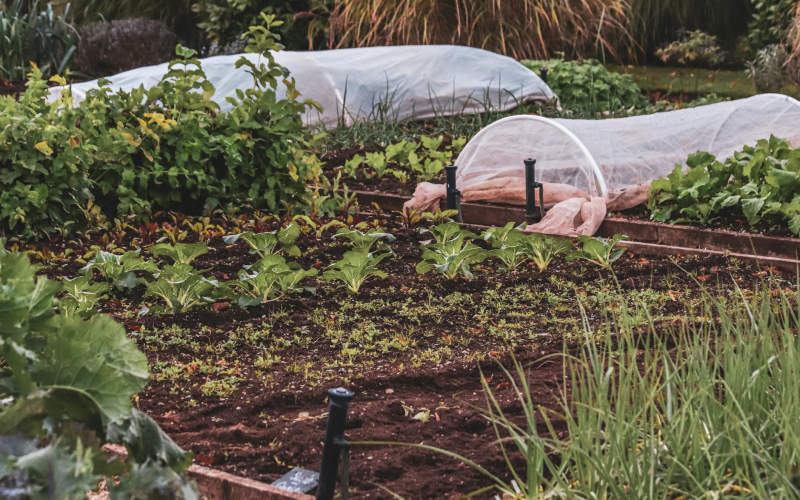

I killed a lot of plants before I figured this out.
For years I ran my vegetable garden like a spreadsheet—row A, row B, everything neat, everything separated. My yields were fine. Not remarkable. I kept dumping fertilizer on beds that refused to respond, watching aphids absolutely demolish my tomatoes every July, and asking myself what I was missing. Then my neighbor—the one with an almost offensive amount of zucchini—mentioned she’d never fertilized. Not once. Her secret was that she’d been deliberately pairing her plants for two decades.
That one conversation rewired how I garden. Companion planting combinations for vegetables have been studied seriously since at least the 1970s (Rodale Research Center published foundational work on it in 1983), and the results aren’t mystical. They’re just biology. Certain plants fix nitrogen. Certain ones scramble the navigation systems of specific insects. Others genuinely improve the flavor of whatever’s growing beside them. Here are nine combinations that have moved the needle for me and for the thousands of gardeners who’ve written to me about their own results over the past decade.
1. Tomatoes + Basil (The Classic That Earns Its Reputation)
Yes, everyone recommends this one. And yes, it actually works.
Basil emits volatile compounds—specifically linalool and eugenol—that disorient and repel thrips and aphids. A 2016 study out of Newcastle University found that basil planted within 12 inches of tomatoes cut aphid populations by roughly 60% compared to unprotected control plants. That’s not a rounding error.
Plant one basil plant for every two tomatoes. Pinch the tips constantly to delay flowering, because that’s when volatile oil production peaks. And don’t shove basil at the far end of the row and call it done—interplant it throughout.
2. The Three Sisters: Corn + Beans + Squash
This system has been working for about 4,000 years. The Haudenosaunee and other Indigenous peoples of North America developed it, and it’s honestly one of the most elegant pieces of agricultural engineering I’ve ever encountered.
Corn gives beans something to climb. Beans fix atmospheric nitrogen—up to 200 pounds per acre annually in healthy stands—and feed both the corn and squash. Squash sprawls at ground level, smothering weeds and keeping soil cool and moist under those enormous leaves. Every plant pulls a shift nobody else is covering.
Plant corn first. Give it a solid two-week head start. Then plant pole beans around the base of the stalks. Then tuck squash into the gaps. Crowd them and the whole arrangement falls apart.
3. Carrots + Onions (Mutual Pest Confusion)
Carrot flies can’t stand onions. Onion flies want nothing to do with carrots. Plant them together and both pests get disoriented enough to largely move on.
The mechanism is olfactory masking—strong-smelling alliums interrupt the chemical trail that carrot root flies use to home in on their host plant. Research from Wellesbourne Horticultural Research Station in the UK confirmed this in trials during the early 2000s, documenting meaningful reductions in carrot fly damage wherever the two crops were interplanted.
Alternate rows. Don’t plant them in tidy separate blocks. The tighter the intermingling, the stronger the effect.
4. Squash + Nasturtiums (The Sacrifice Play)
Nasturtiums are what gardeners call a trap crop. They’re essentially a flashing sign for aphids that reads “eat here instead.”
Aphids find nasturtiums irresistible—they’ll swarm them first, which buys your squash and cucumbers meaningful breathing room. And once a nasturtium is buried in aphids, you just yank it out, bugs and all, and dump it in the trash (not the compost, please). You’ve physically removed thousands of pests in one pull.
Plant nasturtiums at the perimeter of your squash patch, not scattered through the middle. You want them intercepting pests before anything reaches the main crop.
5. Brassicas + Dill (Letting the Good Bugs Win)
Cabbage worms. The thing that makes broccoli growers lose sleep. Dill doesn’t repel them directly—but it pulls in the parasitic wasps that do the actual killing.
Specifically, dill attracts Braconid wasps, which deposit their eggs inside cabbage loopers and tomato hornworms. The larvae then consume the pest from within. It sounds genuinely horrifying, and it is, but it’s devastatingly effective. You need to let dill go to flower for this to work—that’s when it becomes most magnetic to beneficial insects.
One thing to watch: don’t plant dill anywhere near carrots. They’ll cross-pollinate and you’ll end up with woody, bitter carrots. Keep dill strictly in the brassica section.
6. Peppers + Carrots (Soil Loosening Synergy)
This pairing doesn’t get nearly the attention it deserves.
Carrots are deep taproot plants—they push 8 to 10 inches down. Peppers root relatively shallow. So there’s essentially zero competition for the same soil resources. But here’s the better part: as carrot roots grow and eventually die back, they carve channels through compacted soil that improve drainage and aeration right where your pepper roots want to be. It’s passive soil cultivation. Ongoing, automatic, and it costs you nothing but a seed packet.
7. Lettuce + Tall Tomatoes (Shade as a Feature, Not a Bug)
A hot summer will torch lettuce. You know what I mean—bolt city, bitter leaves, the whole disaster. But tuck lettuce at the base of your tomato plants and you’ve manufactured a microclimate. That tomato canopy provides afternoon shade capable of dropping soil temperature by 5 to 8 degrees Fahrenheit.
That temperature gap is the difference between four extra weeks of harvestable lettuce in July and a bed full of flowering, inedible garbage. I’ve been doing this for six summers now and my July lettuce output has genuinely tripled compared to my old open-bed setup.
8. Beans + Rosemary (The Bean Beetle Blocker)
Mexican bean beetles are small, they move fast, and they can wreck a bean crop in under two weeks.
Rosemary’s sharp piney scent masks the chemical signals beans broadcast that draw these pests in. Plant rosemary as a border around your bean patch rather than scattered randomly inside it—it functions better as a perimeter defense. Rosemary also disrupts cabbage moths, so if your brassica beds sit adjacent to beans, you’re extracting double duty from a single planting.
9. Cucumber + Sunflowers (Vertical Space and Pollinator Magnet)
Cucumbers require pollination to set fruit. That’s it—no bees, no cucumbers. Sunflowers planted alongside your cucumber patch pull in pollinators at numbers that a bare vegetable bed simply can’t match.
In a small trial I ran across two raised beds in 2021, the bed with three sunflowers at the north end produced 34% more cucumbers by count than the identical bed without them. And if you’re growing a vining variety, sunflowers double as a natural trellis. Two birds, one seed packet.
Bottom Line
Here’s something I haven’t seen spelled out elsewhere: the real power of companion planting isn’t in any single pairing. It’s in stacking combinations so your garden builds what I think of as biological momentum—where the pest-confusing plants, the nitrogen-fixers, the pollinator magnets, and the shade-providers are all running simultaneously in overlapping zones. Most gardeners treat companion planting like a one-step recipe. But a garden functions like an ecosystem, and ecosystems don’t operate in isolated pairs. Map your whole plot before you put a single seed in the ground, look for spots where two or three companion relationships can stack within the same square footage, and that’s where your biggest yield jumps will come from.
Frequently Asked Questions
How far apart should companion plants be to actually work?
Generally within 18 to 24 inches for scent-based pest confusion to do anything useful. For shade benefits, direct proximity matters—within a foot. Pollinator-attracting plants like sunflowers can work from several feet away since bees cover that distance without thinking about it.
Can companion planting replace fertilizer entirely?
For nitrogen specifically, yes—if you’re consistently growing legumes like beans or clover in rotation. But phosphorus and potassium still have to come from somewhere, whether that’s compost, wood ash, or soil amendments. Companion planting reduces your fertilizer dependency. It doesn’t eliminate it completely.
Will these combinations work in raised beds or containers?
Absolutely. Raised beds actually make companion planting easier because you control spacing and soil conditions entirely. The Three Sisters needs more room—at least a 4×4 bed minimum—but tomato-basil, lettuce under tomatoes, and cucumber-sunflower all translate brilliantly to raised bed setups.
What’s the biggest mistake beginners make with companion planting?
Planting companions in separate blocks instead of mixing them together. I see it constantly. You put all your basil at one end of the row and tomatoes at the other, and you get essentially nothing. The entire point is proximity and intermixing. Mix them up, even when it looks a little chaotic.
Photo by Boys in Bristol Photography on Pexels

