

I killed my first lawn in the summer of 2011. Four weekends of religious watering, fertilizer thrown down in July like I was seasoning a steak, and the whole thing turned into a patchwork of dead brown islands surrounded by struggling green. It took two more seasons and a brutally honest conversation with a local turf specialist before I understood what actually went wrong.
Here’s what makes brown patches so maddening: the fix depends entirely on the cause. And most homeowners are treating the wrong thing entirely. You might be watering more when the real problem is too much water. You might be blaming drought while grubs are quietly devouring your roots a few inches underground.
So before you spend another dollar on products that won’t help, let’s figure out what’s actually happening.
It’s Probably Not What You Think It Is
Heat gets blamed automatically. And yeah, heat stress is real — but pure heat stress without some other underlying trigger is actually pretty rare in most residential lawns.
What’s more likely? You’ve got one of six specific problems, each needing a completely different fix. Treating them all the same way (which most people do) is exactly why those brown patches keep showing up every summer.
Brown Patch Fungal Disease (And Yes, It Has a Name)
Rhizoctonia solani. That’s the fungus behind what’s technically called “Brown Patch disease,” and it thrives in conditions you’ve probably created without realizing it — warm nights above 70°F, high humidity, grass blades staying wet longer than 10 hours.
The tell is circular patches, anywhere from 6 inches to several feet across, with a darker “smoke ring” around the outer edge. You’ll usually spot it early morning before the dew burns off.
The fix: stop evening watering immediately. Water only between 6 and 10 a.m. so blades dry by midday. For active infections, a fungicide with azoxystrobin or propiconazole applied every 14 to 21 days does the job. Scott’s DiseaseEx (contains azoxystrobin, runs about $25 for 10 pounds) is what I’ve pointed people toward for years. But honestly? Fixing your watering schedule will do more than any spray.
Grub Damage (The Underground Culprit)
This one’s sneaky. Grubs — larvae of Japanese beetles, June bugs, or European chafers — feed on your roots from below. The grass mimics drought stress perfectly, right up until you grab a handful and pull. It peels back like carpet. Zero root attachment. That’s your giveaway.
A 2022 University of Kentucky Extension report found that grub populations above 10 per square foot cause visible turf damage. You can check yourself: cut a 1-square-foot section about 3 inches deep and count what you find.
The fix depends on when you catch it. June or July, with damage just starting? A preventive product containing imidacloprid (Bayer Season-Long Grub Control works well) needs to go down before larvae hatch. August, with damage already done? You need a curative product with trichlorfon — apply it, water it in, and plan to overseed the dead areas come fall.
Dog Spots. Simple but Annoying.
Small, roughly circular brown spots — 4 to 8 inches wide — with a ring of darker green grass around the outside. That’s dog urine. The nitrogen concentration in the center burns the grass; the diluted outer edge actually acts like fertilizer, which is why the ring looks so lush.
Confirmation is easy. Ask yourself whether your dog (or a neighbor’s) uses that area. The pattern doesn’t lie.
Fix it with dilution. Water those spots heavily right after your dog uses them. For existing damage, rake out the dead stuff, loosen the soil, throw down grass seed matched to your lawn type, and keep it moist. Takes about three weeks to fill back in.
Compacted Soil and Thatch Buildup
So this one creeps up slowly over years and then suddenly looks like a crisis. Compacted soil — especially clay-heavy soil — blocks water and oxygen from reaching the root zone. Grass starves. You’ll notice it most in high-traffic areas or wherever you habitually park.
Thatch is the layer of dead organic material sitting between the soil and your grass blades. When it exceeds half an inch, it acts as a barrier — water pools on top and evaporates instead of soaking in.
Fix compaction with core aeration, ideally in fall for cool-season grasses or late spring for warm-season varieties. You can rent a core aerator from Home Depot for around $80 for four hours. Worth every cent. For thatch, rent a dethatching machine or work a stiff tine rake through smaller areas.
Drought Stress vs. Dormancy (There’s a Difference)
They look identical, but they’re not the same thing. Dormancy is your grass protecting itself — it’s alive, just shut down. Stress means it’s actually dying.
Here’s the test: push a screwdriver 6 inches into the soil. Goes in easily? Probably dormant, just dry on top. Won’t budge? Compacted and genuinely stressed.
Cool-season grasses like Kentucky bluegrass go dormant around 90°F and bounce back once temperatures drop and rain returns. Don’t panic-water dormant grass — it wastes water and can invite disease. But if you want to keep it green through summer, water deeply: roughly 1 inch per week in one or two sessions, not daily light sprinkles that only wet the top inch.
Fertilizer Burn
This one stings because it’s entirely self-inflicted. Applied too much? Applied during a heat wave? Forgot to water it in? You cooked the roots with excess nitrogen.
Fertilizer burn shows up as streaky brown patches following your exact application pattern. Very geometric. Unmistakable once you know what you’re looking at.
Fix it by flushing — water the area heavily for several days to dilute the nitrogen. Then wait. Some areas recover. Some won’t, and those need overseeding. Going forward: never apply fertilizer when temperatures are above 85°F, and always water thoroughly right after you put it down.
Bottom Line
Here’s something I haven’t seen said plainly enough: most brown patch problems are feedback loops you created, not random bad luck. Your watering schedule built the conditions for fungus. Your fertilization timing set the table for grubs.
And here’s the real insight — your lawn is a diagnostic tool. Learn to read the shape, location, and border characteristics of each brown patch and you stop guessing entirely. Circular with a smoke ring? Fungal. Peels up like carpet? Grubs. Geometric streaks? That one’s on you.
The shape of the damage is the diagnosis. Once I started thinking that way, I stopped wasting money on generic lawn products completely.
Frequently Asked Questions
How do I know if my brown patches are from fungus or something else?
Look at the border. Fungal patches from Rhizoctonia have that characteristic darker smoke ring on the outer edge and seem to appear overnight. Grub damage peels up like loose carpet. Drought stress is more diffuse and tends to follow sun exposure patterns. The shape tells you almost everything.
When should I water my lawn in summer to avoid brown patches?
Between 6 and 10 a.m. That gives blades time to dry out during the day, which cuts fungal risk dramatically. Evening watering — anything after 4 p.m. — keeps grass wet all night and is one of the single biggest contributors to Brown Patch disease.
Can brown grass come back after summer damage?
Depends on the cause. Dormant grass recovers when temperatures cool and rainfall returns — usually September across most of the U.S. Grub-killed grass won’t come back on its own and needs overseeding. Fungal damage often regrows once the infection clears and conditions improve.
How much does it cost to fix brown patches in a lawn?
It ranges quite a bit depending on the cause. Fungicide runs $20 to $30. Grub control products cost $30 to $50. Core aerator rental is around $80 for a half day. Overseeding materials for 1,000 square feet run about $40 to $60. Compare that to a lawn service visit — averaging $150 to $300 for a single treatment — and doing it yourself makes a lot of sense once you’ve actually diagnosed the right problem.
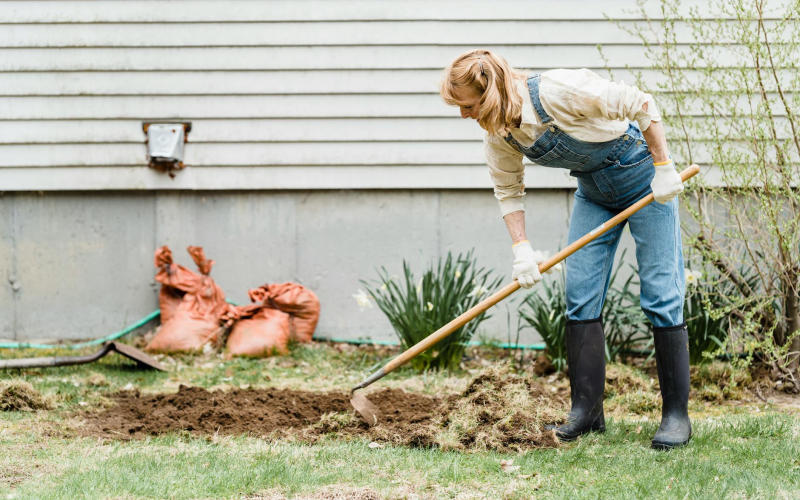
Photo by Greta Hoffman on Pexels

